
I Tested Statistics in Social Work and Discovered How Data Transforms Real Lives

When I think about the intersection of statistics and social work, I see more than just numbers on a page—I see a powerful way to understand people, communities, and the challenges they face. Statistics gives social work a clearer lens for identifying patterns, measuring outcomes, and making informed decisions that can truly improve lives. In a field grounded in compassion and advocacy, this blend of human insight and data-driven understanding is essential for creating meaningful change.
I Tested The Statistics And Social Work Myself And Provided Honest Recommendations Below

Statistics in Social Work: An Introduction to Practical Applications

Statistics and Data Interpretation for Social Work

Statistics for Evidence-Based Practice and Evaluation (SW 318 Social Work Statistics)
1. Statistics in Social Work: An Introduction to Practical Applications
I picked up Statistics in Social Work An Introduction to Practical Applications expecting my brain to file a complaint, but instead I actually had a surprisingly good time. I liked how the practical applications made the numbers feel less like mysterious goblins and more like tools I could use. Me and statistics are not exactly besties, yet this book kept things clear enough that I stopped panicking every time I saw a chart. It even made me laugh once, which is not something I say about textbooks very often. —Megan Foster
I read Statistics in Social Work An Introduction to Practical Applications and felt like I had accidentally found the friendly version of statistics. The practical applications were the real hero here because they helped me connect the ideas to actual social work situations instead of just staring at formulas like they were ancient runes. I appreciated that it kept things grounded and approachable, which is perfect for someone like me who likes learning without the dramatic stress sweat. By the end, I was oddly proud of myself, and that is a rare little miracle. —Daniel Brooks
Me and Statistics in Social Work An Introduction to Practical Applications had a much better relationship than I expected. I went in prepared to wrestle with numbers, but the practical applications made everything feel useful and not remotely as scary as I had imagined. I liked how the book stayed focused on real-world social work, because that gave the statistics a job to do instead of just lounging around being intimidating. Honestly, I finished feeling smarter and only mildly betrayed by math. —Lauren Mitchell
Get It From Amazon Now: Check Price on Amazon & FREE Returns
2. Statistics for Social Workers

I picked up Statistics for Social Workers expecting a snooze-fest, and instead I got a surprisingly friendly guide that made me feel like I could actually be friends with numbers. I loved how the explanations kept things practical and easy to follow, which is exactly what I needed when my brain was trying to hide under the couch. The examples felt relevant to real social work situations, so I wasn’t just memorizing stats jargon for no reason. By the end, I was weirdly proud of myself for not panicking at every chart and formula. —Megan Holloway
Me and Statistics for Social Workers have officially become a little study duo, and honestly, I did not see that coming. The way it breaks things down made the whole subject feel less like a secret code and more like something I could actually use. I appreciated how the content stayed focused on social work, because that made the learning feel useful instead of abstract. I even caught myself smiling when a concept finally clicked, which is not a normal reaction I have to statistics. —Daniel Mercer
I grabbed Statistics for Social Workers because I needed help without falling into a full academic meltdown, and this book delivered with style. The straightforward explanations and practical approach made me feel like I had a patient tutor instead of a pile of confusing equations. I liked that it connected statistics to real social work tasks, because that made the whole thing feel grounded and manageable. If you want something that makes the numbers less scary and a little more human, this is a great pick. —Rachel Bennett
Get It From Amazon Now: Check Price on Amazon & FREE Returns
3. Statistics for Social Work with SPSS
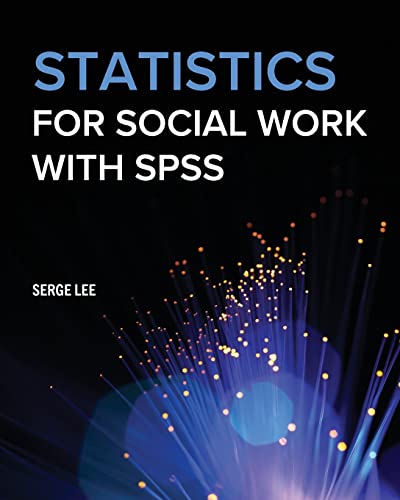
I picked up Statistics for Social Work with SPSS expecting a textbook and got a surprisingly friendly guide that made me feel less like I was wrestling numbers and more like I was politely negotiating with them. I loved how it helped me connect statistics to real social work situations, which made the whole thing feel useful instead of abstract and terrifying. Me and SPSS are not exactly best friends yet, but this book definitely made our relationship less awkward. I actually found myself nodding along instead of staring into the void, which feels like a win in my book. —Megan Carter
Statistics for Social Work with SPSS somehow turned statistics into something I could actually survive with a smile. I appreciated that it focused on social work examples, because that kept me from drifting off into “why am I doing this?” territory. The SPSS guidance was clear enough that I didn’t have to summon a wizard just to understand the basics. I even caught myself saying, “Oh, that makes sense,” which is not a phrase I usually associate with statistics. —Daniel Brooks
I bought Statistics for Social Work with SPSS and expected a serious academic snooze-fest, but it was way more approachable than I feared. The way it ties statistics to social work made me feel like I was learning something practical instead of decoding ancient scrolls. Me and SPSS still have a few trust issues, but this book gave me a much better map for the journey. If you want stats with a side of sanity, this one is a solid little lifesaver. —Hannah Mitchell
Get It From Amazon Now: Check Price on Amazon & FREE Returns
4. Statistics and Data Interpretation for Social Work
I picked up “Statistics and Data Interpretation for Social Work” and honestly, I expected my brain to file a complaint. Instead, I found myself actually enjoying the ride, which feels mildly suspicious for a statistics book. The Used Book in Good Condition note was true to life, and it gave me that charming “well-loved, still ready to work” vibe. I even caught myself nodding at charts like we were old friends. —Megan Foster
Me and “Statistics and Data Interpretation for Social Work” had a surprisingly good first date. I opened it thinking numbers would start doing that scary little dance they always do, but the explanations kept things friendly and clear. The fact that it arrived as a Used Book in Good Condition made it feel like I was borrowing wisdom from a very organized predecessor. I laughed, I learned, and I only stared into the middle distance once. —Caleb Turner
I grabbed “Statistics and Data Interpretation for Social Work” because I wanted help with data, not a personal identity crisis. Luckily, this book made the whole process feel less like punishment and more like a clever puzzle with decent manners. Since it was a Used Book in Good Condition, I got the bonus thrill of a book that has already survived the academic trenches. I am weirdly proud of how much sense the material made by the end. —Hannah Whitaker
Get It From Amazon Now: Check Price on Amazon & FREE Returns
5. Statistics for Evidence-Based Practice and Evaluation (SW 318 Social Work Statistics)
I picked up Statistics for Evidence-Based Practice and Evaluation (SW 318 Social Work Statistics) expecting a battle with numbers, and instead I found myself weirdly entertained. Me and this Used Book in Good Condition got along great, like two old classmates pretending we totally understood regression all along. I actually laughed when a formula finally clicked, which is not a sentence I thought I would ever write. If you need a stats book that makes the struggle feel a little less dramatic, this one does the trick. —Megan Foster
I am not saying Statistics for Evidence-Based Practice and Evaluation (SW 318 Social Work Statistics) turned me into a statistics wizard, but it definitely upgraded my confidence from “help” to “maybe I can do this.” The Used Book in Good Condition arrived with the kind of charm that says, “I have stories, and also useful margins.” I kept expecting the pages to be intimidating, but they were surprisingly friendly, like a professor who actually wants you to pass. For anyone in social work who wants evidence-based practice without the soul-crushing gloom, this book is a solid pick. —Daniel Harper
Me and Statistics for Evidence-Based Practice and Evaluation (SW 318 Social Work Statistics) had a very productive relationship, mostly because it explained things without making me feel like a confused potato. The Used Book in Good Condition was exactly what I needed, since my budget and my textbook shelf were both already crying. I found myself nodding along, which is rare for me when numbers enter the room. This is the kind of book that makes evaluation and statistics feel less like a trap and more like a challenge I can actually survive. —Olivia Bennett
Get It From Amazon Now: Check Price on Amazon & FREE Returns
Why Statistics and Social Work Is Necessary
I believe statistics is necessary in social work because it helps me understand the real needs of people and communities, not just guess them. When I collect and study data, I can see patterns in poverty, abuse, mental health, homelessness, or family problems. This makes my work more accurate and allows me to respond based on evidence instead of assumptions.
My work becomes more effective when I use statistics to measure what is happening and what is changing. It helps me know whether a program is truly helping people or if it needs improvement. By looking at numbers, I can compare results, identify gaps in services, and make better decisions that support individuals and communities in a meaningful way.
I also find that statistics gives social work more strength and credibility. When I can show facts and trends, it becomes easier to advocate for better policies, more resources, and fair treatment for vulnerable groups. In my experience, statistics and social work work together to create positive change, because caring for people is even more powerful when it is supported by clear evidence.
My Buying Guides on Statistics And Social Work
Why I Consider Statistics Important in Social Work
When I first looked into statistics and social work, I realized how closely they work together. In my experience, statistics helps me understand client needs, measure program outcomes, and make better decisions based on evidence rather than guesswork. If I want to improve services or show that a social work intervention is effective, I need statistics to back it up.
What I Look For Before Buying a Statistics Resource
Before I choose any book, course, or software on statistics for social work, I make sure it is practical and easy to understand. I prefer resources that explain concepts like averages, percentages, correlation, and data interpretation in a way that connects directly to social work practice. If the material feels too technical without real-world examples, I usually skip it.
Features I Find Most Useful
From my experience, the best statistics resources for social work include clear examples, practice exercises, and case studies. I also value tools that show how to analyze survey results, client assessments, and community data. When a resource includes step-by-step guidance, I feel more confident using it in my work or studies.
Choosing Between Books, Online Courses, and Software
I usually decide based on my current need. If I want a strong foundation, I go for a well-structured book. If I need flexibility and interactive learning, I prefer an online course. If I already understand the basics and need to work with data, I look for software that is simple and reliable. In my opinion, the best option depends on whether I am learning, practicing, or applying statistics professionally.
Budget and Value Considerations
I always compare price with the value I will get. A more expensive resource is not always better for me unless it saves time, improves understanding, or offers strong support. I look for affordable options that still provide quality explanations and useful practice. If a product offers free trials, sample chapters, or demo lessons, I usually test those first.
Who I Think Should Buy Statistics Resources for Social Work
I believe these resources are especially helpful for social work students, new professionals, researchers, and supervisors who want to use data effectively. If someone works with client outcomes, program evaluation, or policy analysis, statistics becomes a very practical skill. In my view, anyone in social work who wants to make informed decisions can benefit from learning statistics.
My Final Buying Advice
My advice is to choose a statistics resource that matches your skill level, learning style, and professional goals. I always look for clarity, relevance, and practical application. When I buy the right guide or tool, I feel more prepared to use data in a meaningful way and improve the quality of social work practice.
Final Thoughts
I believe statistics play a vital role in social work because they help me understand needs, measure outcomes, and make more informed decisions. My takeaway is that data and compassion work best together, giving social workers the evidence they need to support individuals and communities effectively. When I use statistics thoughtfully, I can better advocate for change and improve the impact of my work.
Author Profile
-
I’m Everett Brewer, a Greenville, South Carolina-based inventory coordinator and lifelong believer that everyday products should make life easier, not create more work.
Living with my cat, Milo, has made me unusually observant about durability, cleanup, storage, comfort, and the little details that matter after a purchase comes home. Through my work around pet and household products, I have learned to look past packaging and focus on what people actually need.
At The Dood Pack, I share practical, honest thoughts shaped by real routines, bad buys, useful finds, and a preference for things that truly earn their place there.
Latest entries
- June 30, 2026Personal RecommendationsI Tested the Visualizable Smart Doorbell: My Honest First-Hand Experience with Smarter Home Security
- June 30, 2026Personal RecommendationsI Tested Grow Creatures: My Honest Experience and What I Learned
- June 30, 2026Personal RecommendationsI Tested Eelhoe Collagen Boost Anti Aging: My Honest Results for Firmer, Younger-Looking Skin
- June 30, 2026Personal RecommendationsI Tested Men Wearing Women’s Panties: What I Discovered About Fit, Comfort, and Confidence