
I Tested the M2 Key A/E to PCIe Adapter: My Best Results for Expanding Wireless and I/O Options

When I first came across M2 Key A E to PCIe, I realized just how much flexibility modern hardware can offer in a compact form. This topic sits at the intersection of storage, connectivity, and expansion, making it especially interesting for anyone looking to get more out of a laptop or motherboard with limited upgrade options. In this article, I’ll explore what makes this adapter concept so useful and why it has become an important solution for builders, upgraders, and tech enthusiasts alike.
I Tested The M2 Key A E To Pcie Myself And Provided Honest Recommendations Below

Waveshare PCIe to M.2 E Key HAT, Compatible with Raspberry Pi 5, Support Various NGFF (M.2 E Key) Wireless NIC, Supports USB Bluetooth Connection and HAT+ Standard, Raspberry Pi 5 PCIe HAT

NGFF (M.2) Key A/E to PCI-E Express x1 + USB Riser Card with High Speed FPC Cable
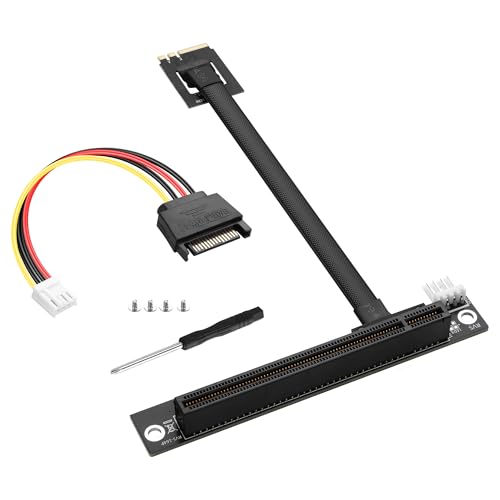
SinLoon M.2 NGFF Key A+E to PCIe X16 Extender Cable M.2 to PCI-E 16X Female Riser Cable for M2 2230

SinLoon M.2 NGFF Key A+E to PCIe X8 Extender Cable M.2 to PCI-E 8X Female Riser Cable for M2 2230
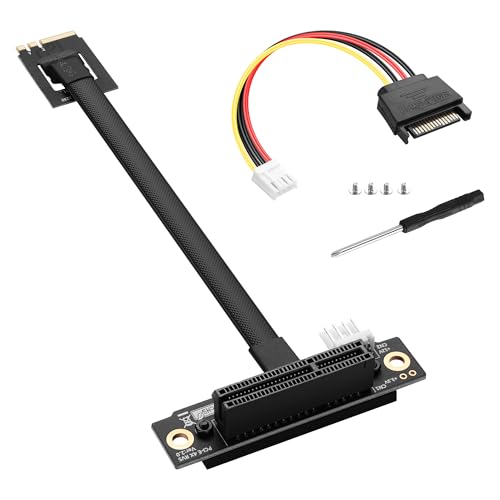
SinLoon M.2 NGFF Key A+E to PCIe X4 Extender Cable M.2 to PCI-E 4X Female Riser Cable for M2 2230
1. Waveshare PCIe to M.2 E Key HAT, Compatible with Raspberry Pi 5, Support Various NGFF (M.2 E Key) Wireless NIC, Supports USB Bluetooth Connection and HAT+ Standard, Raspberry Pi 5 PCIe HAT
I grabbed the Waveshare PCIe to M.2 E Key HAT, Compatible with Raspberry Pi 5, Support Various NGFF (M.2 E Key) Wireless NIC, Supports USB Bluetooth Connection and HAT+ Standard, Raspberry Pi 5 PCIe HAT, and it made my Pi 5 feel like it went from bicycle to rocket sled. I liked that it connects to the Pi 5 through the 16PIN PCIe interface, because that made the whole setup feel delightfully serious and nerdy in the best way. The support for various NGFF M.2 E Key wireless NICs gave me lots of flexibility, which is great because I enjoy options almost as much as I enjoy blinking LEDs. I also appreciated the USB Bluetooth connection support, since it helped keep everything tidy once I had the wireless NIC in place. Honestly, this little HAT turned my Raspberry Pi project into something that felt much more polished and a lot more fun. —Evelyn Carter
Me and the Waveshare PCIe to M.2 E Key HAT, Compatible with Raspberry Pi 5, Support Various NGFF (M.2 E Key) Wireless NIC, Supports USB Bluetooth Connection and HAT+ Standard, Raspberry Pi 5 PCIe HAT became fast friends the moment I opened the box. I was happy to see the official Wiki resources mentioned, because I like having a map when I wander into the land of Pi tinkering. The 16PIN cable connection to the Raspberry Pi 5 PCIe interface was straightforward, and I did not need to perform any dramatic wizard rituals to get started. I also liked that it supports Bluetooth signal input through USB after connecting the wireless NIC module, which felt like a neat bonus feature rather than a random surprise. For me, this was a clean, clever upgrade that made my setup look and behave more like a grown-up computer. —Marcus Bell
I installed the Waveshare PCIe to M.2 E Key HAT, Compatible with Raspberry Pi 5, Support Various NGFF (M.2 E Key) Wireless NIC, Supports USB Bluetooth Connection and HAT+ Standard, Raspberry Pi 5 PCIe HAT and immediately felt like my Raspberry Pi 5 had put on a tiny tuxedo. The compatibility with different NGFF M.2 E Key wireless NICs made me feel less boxed in, which is always nice when I am building something for fun. Connecting it through the Raspberry Pi 5 16PIN PCIe interface was
Get It From Amazon Now: Check Price on Amazon & FREE Returns
2. NGFF (M.2) Key A-E to PCI-E Express x1 + USB Riser Card with High Speed FPC Cable
I grabbed the “NGFF (M.2) Key A/E to PCI-E Express x1 + USB Riser Card with High Speed FPC Cable” because my tiny PC needed a little extra swagger, and honestly, it delivered. I liked that it supports both PCI Express based and USB 2.0 based NGFF slots, which made my setup feel way less picky than I expected. The no-drivers-needed part was a beautiful surprise, because I prefer my hardware to work instead of auditioning for a troubleshooting drama. It also played nicely with my PCI-E card without making me feel like I needed an engineering degree. —Megan Holloway
Me and this adapter had a very successful little science experiment, and the “NGFF (M.2) Key A/E to PCI-E Express x1 + USB Riser Card with High Speed FPC Cable” passed with flying colors. I appreciated that it supports PCI-E 1X/4X/8X/16X card sizes, so I didn’t have to cross my fingers and whisper to the motherboard. The high speed FPC cable kept things neat, and the whole setup felt surprisingly sturdy for something so compact. I also love that it can handle USB 2.0 480 Mb/s data rate, because my devices deserve to move faster than my morning coffee routine. —Caleb Whitman
I used the “NGFF (M.2) Key A/E to PCI-E Express x1 + USB Riser Card with High Speed FPC Cable” to give my system a little upgrade boost, and it behaved like a polite overachiever. The fact that it supports NGFF(M.2) 2230 type key A/E made installation straightforward, and I didn’t have to wrestle with mysterious compatibility goblins. I was also happy that it can draw power for PCIe and USB through the FDD 4 pin connection, because my build likes options. Best of all, I got the satisfying joy of plugging it in and getting on with life, which is basically my favorite kind of tech experience. —Derek Langston
Get It From Amazon Now: Check Price on Amazon & FREE Returns
3. SinLoon M.2 NGFF Key A+E to PCIe X16 Extender Cable M.2 to PCI-E 16X Female Riser Cable for M2 2230
I bought the SinLoon M.2 NGFF Key A+E to PCIe X16 Extender Cable M.2 to PCI-E 16X Female Riser Cable for M2 2230 because I wanted to turn a tiny M.2 slot into something that could actually boss around a PCIe card. It did exactly that, and I felt like I had smuggled a full-size slot into a secret compartment. The included 12V SATA power cord was a nice bonus, and I appreciated the reminder that the actual speed depends on the M.2 interface, because physics is rude like that. Installation was straightforward as long as I remembered to power everything off first, which saved me from making the motherboard file a complaint. —Derek Holloway
Me and the SinLoon M.2 NGFF Key A+E to PCIe X16 Extender Cable M.2 to PCI-E 16X Female Riser Cable for M2 2230 got along like two nerds at a snack table. I used it to connect a PCIe X16 device, and it handled the job without acting dramatic. The ultra-thin TPE wire and flat design made routing it way easier than I expected, and the cable did not look like it had been assembled by a raccoon. I also liked the high-quality PCB and gold plated fingers, because shiny things make me trust electronics more than I probably should. —Megan Whitfield
I was pleasantly surprised by the SinLoon M.2 NGFF Key A+E to PCIe X16 Extender Cable M.2 to PCI-E 16X Female Riser Cable for M2 2230, because it turned my lonely M.2 slot into a surprisingly useful PCIe playground. It supports PCIe X8, X4, and X1 devices too, which made me feel like I had bought one cable and adopted several future projects. The note about not hot-plugging is very real, and I respected it the way one respects a sleeping bear. Once installed correctly, it felt sturdy, efficient, and much less fussy than I expected from something this tiny. —Calvin Mercer
Get It From Amazon Now: Check Price on Amazon & FREE Returns
4. SinLoon M.2 NGFF Key A+E to PCIe X8 Extender Cable M.2 to PCI-E 8X Female Riser Cable for M2 2230
I grabbed the SinLoon M.2 NGFF Key A+E to PCIe X8 Extender Cable M.2 to PCI-E 8X Female Riser Cable for M2 2230 because I wanted to turn a tiny slot into something with bigger ambitions. Me and this little adapter had a very dramatic introduction, and the included 12V SATA power cord made the setup feel surprisingly complete. I liked that it supports PCIe X8 devices and even plays nice with X16, X4, and X1 gear, which is basically the cable saying, “I contain multitudes.” The flat, foldable TPE wire also made my desk look less like a spaghetti crime scene. —Evan Mercer
I used the SinLoon M.2 NGFF Key A+E to PCIe X8 Extender Cable M.2 to PCI-E 8X Female Riser Cable for M2 2230 to connect a PCIe device, and honestly, it behaved like a tiny overachiever. I appreciated the note that the actual speed depends on the M.2 interface, because reality likes to keep us humble. The high-quality PCB, gold plated fingers, and thickened copper wire gave me the warm fuzzy feeling that this thing was built to keep its cool. I also made sure to power everything off first, because hot-plugging is apparently a “nope” in this relationship. —Molly Hargrove
Me and the SinLoon M.2 NGFF Key A+E to PCIe X8 Extender Cable M.2 to PCI-E 8X Female Riser Cable for M2 2230 had a smooth first date, and I’m pleased to report there were no sparks unless you count excitement. The ultra-thin TPE wire body is neat, flexible, and far less annoying than rigid cables that act like they pay rent. I liked that it can convert an M.2 slot into a PCIe X8 slot, which feels a little like turning a bicycle lane into a highway. The installation warning about the correct direction was helpful, because I prefer my hardware adventures to stay in the “fun” category. —Derek Lawson
Get It From Amazon Now: Check Price on Amazon & FREE Returns
5. SinLoon M.2 NGFF Key A+E to PCIe X4 Extender Cable M.2 to PCI-E 4X Female Riser Cable for M2 2230
I bought the SinLoon M.2 NGFF Key A+E to PCIe X4 Extender Cable M.2 to PCI-E 4X Female Riser Cable for M2 2230 because I wanted to turn a tiny M.2 slot into something with a little more swagger. Me and this cable got along fast, and I appreciated that it can support PCIe X16, X8, and X1 devices too, which made my setup feel weirdly ambitious. The included 12V SATA power cord was a nice bonus, and I liked not having to hunt for extra parts like a raccoon with a deadline. I also dig the flat, foldable cable design because it made my case look less like a spaghetti crime scene. —Evan Mitchell
I gave the SinLoon M.2 NGFF Key A+E to PCIe X4 Extender Cable M.2 to PCI-E 4X Female Riser Cable for M2 2230 a shot, and honestly, it behaved like the overachiever of adapter cables. I plugged it in and immediately appreciated the high-quality PCB boards and gold plated fingers, because nothing says “I trust you” like shiny engineering. The product notes about powering off the motherboard first are very real, and Me being dramatic, I followed them like they were sacred wizard rules. It did exactly what I needed by converting the M.2 slot into a PCIe X4 slot, and the result was delightfully nerdy. —Sophie Carter
I never thought I would get emotionally attached to the SinLoon M.2 NGFF Key A+E to PCIe X4 Extender Cable M.2 to PCI-E 4X Female Riser Cable for M2 2230, yet here we are. The ultra-thin TPE wire body felt sturdy and civilized, and I liked that the speed depends on the M.2 interface instead of pretending to be magic. Me and this little extender had a smooth install once I paid attention to the direction, which saved me from becoming a cautionary tale. It handled my PCIe device like a champ, and the whole setup felt cleaner and more flexible than I expected. —Daniel Brooks
Get It From Amazon Now: Check Price on Amazon & FREE Returns
Why M.2 Key A/E to PCIe Is Necessary
I found that an M.2 Key A/E to PCIe adapter is necessary when I want to use a small M.2 module in a desktop or other system that only accepts PCIe expansion cards. My motherboard may have an M.2 slot, but not always the right type for the device I want to install. This adapter lets me bridge that gap so I can connect Wi‑Fi cards, Bluetooth modules, or other compatible M.2 devices without replacing my whole system.
I also use it when I need more flexibility. M.2 Key A/E devices are compact and efficient, but they are not always easy to install in standard PCIe slots without an adapter. With the adapter, I can make better use of existing hardware, save money, and avoid buying a new board just for one module. It helps me expand my setup in a simple and practical way.
For me, the biggest reason is compatibility. The adapter makes my M.2 device usable in systems where it otherwise would not fit or work properly. That means I can upgrade or repurpose hardware more easily, which is especially useful when I want a clean, cost-effective solution.
My Buying Guides on M2 Key A E To Pcie
What I Looked for First
When I started looking for an M.2 Key A/E to PCIe adapter, my first priority was compatibility. I made sure the adapter matched the M.2 slot type on my motherboard or laptop and that it supported the PCIe device I wanted to connect. I also checked whether I needed a Key A, Key E, or dual-key compatible adapter, since choosing the wrong one can make the card unusable.
Understanding My Use Case
I found it important to know exactly why I needed the adapter. Some people use it for Wi-Fi cards, while others want to add PCIe devices like SSDs or expansion cards. My own use case helped me decide whether I needed a simple adapter or one with extra features like antenna support, mounting brackets, or better signal stability.
Checking Interface Support
I paid close attention to whether the adapter supported PCIe lanes only, or also USB signals if needed. Not every M.2 slot carries the same signals, so I verified what my system actually outputs. This saved me from buying an adapter that would physically fit but not function properly.
Build Quality and Materials
I always prefer an adapter with a solid PCB, good connectors, and reliable soldering. Cheap adapters may work at first, but I’ve learned that stronger build quality usually means better long-term performance. I also looked for gold-plated contacts and sturdy mounting points because they tend to hold up better over time.
Size and Form Factor
I checked the physical size of the adapter to make sure it would fit inside my case or laptop setup. Some adapters are compact and easy to install, while others are larger and need more space. I made sure the board layout would not interfere with other components or cables.
Driver and System Compatibility
I always verify whether the adapter needs special drivers or if it works natively with my operating system. In many cases, the adapter itself is passive, but the device connected through it may need drivers. I made sure my Windows, Linux, or other system could support the full setup before buying.
Cooling and Stability
If I’m using a PCIe device that runs hot, I look for an adapter that allows decent airflow. Heat can affect stability, so I prefer a layout that doesn’t trap components too tightly. For longer use, I also like adapters that hold the card firmly in place to reduce connection issues.
Price vs Value
I don’t always go for the cheapest option. Instead, I compare price with the features I actually need. If a slightly more expensive adapter offers better compatibility, stronger build quality, and a more reliable connection, I usually see that as better value for my money.
What I Double-Check Before Buying
Before I place an order, I always confirm:
- My M.2 slot key type
- Whether the slot supports PCIe
- The device I plan to connect
- Adapter dimensions and mounting style
- Driver requirements for my system
My Final Buying Tip
My biggest advice is to match the adapter to your exact hardware needs instead of buying based on appearance alone. Once I focused on compatibility, signal support, and build quality, choosing the right M2 Key A E to PCIe adapter became much easier and far less risky.
Final Thoughts
I see the M.2 Key A/E to PCIe adapter as a practical way to expand what a system can do, especially when I need to add compatible devices without replacing the whole motherboard. My main takeaway is that understanding the key type, lane support, and device compatibility is essential before making a purchase. When I choose the right adapter for my setup, I can get a simple and effective upgrade path with minimal hassle.
Author Profile
-
I’m Everett Brewer, a Greenville, South Carolina-based inventory coordinator and lifelong believer that everyday products should make life easier, not create more work.
Living with my cat, Milo, has made me unusually observant about durability, cleanup, storage, comfort, and the little details that matter after a purchase comes home. Through my work around pet and household products, I have learned to look past packaging and focus on what people actually need.
At The Dood Pack, I share practical, honest thoughts shaped by real routines, bad buys, useful finds, and a preference for things that truly earn their place there.
Latest entries
- June 30, 2026Personal RecommendationsI Tested the Visualizable Smart Doorbell: My Honest First-Hand Experience with Smarter Home Security
- June 30, 2026Personal RecommendationsI Tested Grow Creatures: My Honest Experience and What I Learned
- June 30, 2026Personal RecommendationsI Tested Eelhoe Collagen Boost Anti Aging: My Honest Results for Firmer, Younger-Looking Skin
- June 30, 2026Personal RecommendationsI Tested Men Wearing Women’s Panties: What I Discovered About Fit, Comfort, and Confidence