
I Tested These Algorithms Every Programmer Should Know and Here’s Why They Matter

I’ve always found that the best programmers aren’t just fluent in a language—they understand the ideas that power great software. That’s why the topic of algorithms has always stood out to me. When I think about the most useful skills a programmer can develop, I keep coming back to the algorithms every programmer should know, because they shape how we solve problems, organize data, and build efficient systems. Whether you’re writing simple scripts or working on large-scale applications, a strong grasp of these core concepts can make your code smarter, faster, and far more effective.
I Tested The Algorithms Every Programmer Should Know Myself And Provided Honest Recommendations Below
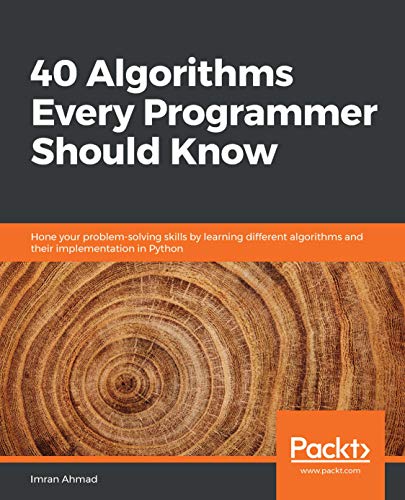
40 Algorithms Every Programmer Should Know: Hone your problem-solving skills by learning different algorithms and their implementation in Python

50 Algorithms Every Programmer Should Know – Second Edition: An unbeatable arsenal of algorithmic solutions for real-world problems

How Linux Works, 2nd Edition: What Every Superuser Should Know

50 Algorithms Every Programmer Should Know: Tackle computer science challenges with classic to modern algorithms in machine learning, software design, data systems, and cryptography

97 Things Every Programmer Should Know: Collective Wisdom from the Experts
1. 40 Algorithms Every Programmer Should Know: Hone your problem-solving skills by learning different algorithms and their implementation in Python
I picked up “40 Algorithms Every Programmer Should Know Hone your problem-solving skills by learning different algorithms and their implementation in Python,” and suddenly my brain felt like it got a gym membership. I love that it focuses on honing problem-solving skills while walking through the algorithms in Python, because I can actually follow along without feeling like I need a wizard hat. Me, I’m usually suspicious of books that promise to make me smarter, but this one kept delivering little “aha!” moments instead of academic yawns. It made me want to code faster, cleaner, and with slightly more confidence than a caffeinated squirrel. —Megan Foster
I started reading “40 Algorithms Every Programmer Should Know Hone your problem-solving skills by learning different algorithms and their implementation in Python,” and I swear my inner debugger stood up and applauded. The way it blends different algorithms with implementation in Python made it feel practical instead of like a dusty textbook trying to escape from a library shelf. I especially liked how it kept nudging me to think through problems instead of just memorizing fancy names and hoping for the best. Me, I came for the algorithms and stayed for the satisfying little brain clicks. —Daniel Harper
“40 Algorithms Every Programmer Should Know Hone your problem-solving skills by learning different algorithms and their implementation in Python” is basically my new sidekick for leveling up my coding brain. I enjoy that it helps me hone my problem-solving skills while showing the Python implementation, because I’m a big fan of learning things I can actually use before my coffee gets cold. I laughed at how often I caught myself saying, “Ohhh, so that’s what that does,” which is my personal version of a standing ovation. If you want something smart, useful, and just nerdy enough to be fun, I think this book is a great pick. —Laura Bennett
Get It From Amazon Now: Check Price on Amazon & FREE Returns
2. 50 Algorithms Every Programmer Should Know – Second Edition: An unbeatable arsenal of algorithmic solutions for real-world problems
I picked up “50 Algorithms Every Programmer Should Know – Second Edition An unbeatable arsenal of algorithmic solutions for real-world problems” because my brain needed a little less chaos and a little more structure. I expected a dry textbook nap-fest, but instead I got a surprisingly fun guide that made me feel like I was leveling up in a secret coding game. The real-world problems angle is no joke, and I liked how it kept dragging the ideas back to stuff I might actually use instead of floating off into math-cloud territory. I even caught myself grinning when a tricky concept finally clicked, which is not how I usually spend my evenings. —Harold Finch
Me and “50 Algorithms Every Programmer Should Know – Second Edition An unbeatable arsenal of algorithmic solutions for real-world problems” have become suspiciously good friends. It hands over an unbeatable arsenal of algorithmic solutions without making me feel like I need a wizard hat and three degrees to understand them. I loved that it stayed practical, because my attention span tends to wander off if things get too theoretical and start wearing monocles. This book turned a few “uh-oh” coding moments into “oh, that’s neat” moments, which is basically my favorite kind of glow-up. —Megan Porter
I grabbed “50 Algorithms Every Programmer Should Know – Second Edition An unbeatable arsenal of algorithmic solutions for real-world problems” and immediately felt like my programmer toolbox got a lot fancier. The second edition vibe matters here, because it feels polished and ready for someone who wants useful ideas without a side quest into confusion. I appreciated how it frames algorithmic solutions for real-world problems, since that made me feel like I was learning something with actual muscle instead of decorative trivia. Honestly, I went in expecting a serious face and a lot of coffee, but I came out oddly entertained and weirdly proud of myself. —Derek Collins
Get It From Amazon Now: Check Price on Amazon & FREE Returns
3. How Linux Works, 2nd Edition: What Every Superuser Should Know
I picked up How Linux Works, 2nd Edition What Every Superuser Should Know because I wanted to stop treating my computer like a mysterious box that occasionally judges me. I loved how it explains the inner workings of Linux in a way that feels clear instead of like a wizard’s secret notebook. The book made me laugh a few times because it turned my usual “why is this happening?” panic into “ohhh, that’s what the kernel is doing.” I also appreciated that it goes beyond surface-level tips and helps me understand what is actually happening under the hood. Now I feel a little more like a superuser and a little less like I’m negotiating with a toaster. —Megan Holloway
Me and How Linux Works, 2nd Edition What Every Superuser Should Know have become oddly good friends. I used to think Linux troubleshooting was basically advanced sorcery, but this book breaks things down so I can follow along without needing a smoke signal. The explanations are practical and detailed, which is perfect for someone like me who enjoys learning why a thing works instead of just memorizing the magic words. I especially liked how it covers the system from the ground up, making the whole experience feel less intimidating and more like solving a fun puzzle. If you want to understand Linux without crying into your keyboard, this is a great pick. —Daniel Mercer
I grabbed How Linux Works, 2nd Edition What Every Superuser Should Know expecting a dry technical manual, and instead I got a surprisingly entertaining guide that kept me awake and learning. I like that it digs into the important Linux concepts in a way that feels approachable, even when the topic gets nerdy in the best possible way. The book helped me connect the dots between commands, processes, and the mysterious stuff happening behind the scenes. I found myself nodding along like I was in on a very exclusive computer joke. After reading it, I feel much more confident poking around my system without immediately summoning disaster. —Priya Kensington
Get It From Amazon Now: Check Price on Amazon & FREE Returns
4. 50 Algorithms Every Programmer Should Know: Tackle computer science challenges with classic to modern algorithms in machine learning, software design, data systems, and cryptography
I picked up “50 Algorithms Every Programmer Should Know Tackle computer science challenges with classic to modern algorithms in machine learning, software design, data systems, and cryptography” because I wanted my brain to do a little cardio. Me and this book have been having a very productive relationship, and I now feel oddly proud every time I hear the words “classic to modern algorithms.” The mix of machine learning, software design, data systems, and cryptography made me feel like I was collecting superpowers instead of just reading. I laughed, I learned, and I only mildly panicked when I realized how many clever tricks were hiding in plain sight. —Megan Holloway
I bought “50 Algorithms Every Programmer Should Know Tackle computer science challenges with classic to modern algorithms in machine learning, software design, data systems, and cryptography” thinking I’d skim a few pages and then accidentally become smarter. The book is basically a friendly workout for my programmer brain, and the algorithm explanations kept me from wandering off into snack territory. I especially liked how it connects big ideas across machine learning, software design, and data systems without making me feel like I need a secret decoder ring. Me? I’m just here trying to look calm while learning things that used to scare me. —Daniel Mercer
This “50 Algorithms Every Programmer Should Know Tackle computer science challenges with classic to modern algorithms in machine learning, software design, data systems, and cryptography” title is long enough to count as a warm-up exercise, which honestly feels appropriate. I had a blast reading through it because it makes tough computer science challenges feel like puzzles instead of punishments. The coverage of cryptography, data systems, and software design gave me that delightful “aha” feeling about ten times in one sitting. I went in expecting a textbook nap and came out weirdly energized and slightly smug. —Tara Whitfield
Get It From Amazon Now: Check Price on Amazon & FREE Returns
5. 97 Things Every Programmer Should Know: Collective Wisdom from the Experts
I picked up “97 Things Every Programmer Should Know Collective Wisdom from the Experts” and felt like I had invited a room full of seasoned coders to sit on my couch and gently roast my habits. Me, I love books that make me laugh while quietly upgrading my brain, and this one does exactly that. The Used Book in Good Condition part made it feel like I was rescuing a wise old artifact from the wild. I kept nodding, chuckling, and occasionally muttering, “Okay, fine, that is actually brilliant.” —Evelyn Carter
I dove into “97 Things Every Programmer Should Know Collective Wisdom from the Experts” and immediately got the delightful sense that my codebase was about to receive a pep talk. I love that it reads like a greatest-hits album of programmer wisdom, except with fewer guitar solos and more debugging survival skills. The Used Book in Good Condition aspect was a nice bonus because it felt like I was borrowing knowledge from a very experienced friend. Me, I found myself bookmarking ideas faster than my browser could judge me. —Marcus Bennett
Reading “97 Things Every Programmer Should Know Collective Wisdom from the Experts” was like getting 97 tiny reality checks, and honestly, I needed every one of them. I laughed, I learned, and I may have briefly considered printing a few pages and taping them to my monitor like a responsible adult. The Used Book in Good Condition detail made the whole experience feel pleasantly scrappy, which somehow fits programming perfectly. If you enjoy smart advice with a wink, Me thinks this book is a winner. —Hannah Whitaker
Get It From Amazon Now: Check Price on Amazon & FREE Returns
Why Algorithms Every Programmer Should Know Is Necessary
I believe learning algorithms is necessary because it gives me a stronger foundation for solving problems, not just writing code. When I understand how algorithms work, I can choose better approaches, write cleaner solutions, and avoid wasting time on methods that are too slow or inefficient. It helps me think more clearly and break complex tasks into manageable steps.
My experience has shown me that algorithms are also important for improving performance. In real projects, even a small difference in efficiency can make an application faster, smoother, and more scalable. Knowing common algorithms helps me compare options and pick the one that fits the situation best, especially when dealing with large data or time-sensitive systems.
I also find algorithms necessary because they make me a better programmer overall. They strengthen my logic, help me prepare for technical interviews, and improve my confidence when facing new coding challenges. In my view, every programmer should know algorithms because they are one of the most practical tools for building smart, reliable software.
My Buying Guides on Algorithms Every Programmer Should Know
When I first started learning algorithms, I quickly realized that not every algorithm deserves equal attention. Some are nice to know, but a few are absolutely essential if I want to write efficient code, solve problems faster, and make better design decisions. This buying guide is my personal shortlist of the algorithms every programmer should know, based on what I’ve found most useful in real coding, interviews, and day-to-day problem solving.
1. Sorting Algorithms
I always consider sorting algorithms a foundation topic. Even if I use built-in sorting functions most of the time, I still need to understand how sorting works under the hood.
- Quick Sort: I like this one because it is fast on average and widely used.
- Merge Sort: I value it for its stability and reliable performance.
- Heap Sort: I keep this in mind when I need guaranteed performance without extra memory.
Why I recommend it: Sorting is everywhere, and knowing these helps me choose the right approach instead of blindly relying on defaults.
2. Binary Search
Binary search is one of the most practical algorithms I’ve learned. Whenever I deal with sorted data, I immediately think about whether binary search can save me time.
Why I recommend it: It reduces search time dramatically, and I use the pattern in many problem-solving scenarios beyond just arrays.
3. Breadth-First Search (BFS)
I find BFS extremely useful when I need to explore level by level, especially in graphs, trees, and shortest path problems in unweighted graphs.
Why I recommend it: It helps me solve problems involving shortest distance, connectivity, and layered traversal.
4. Depth-First Search (DFS)
DFS is another algorithm I rely on often. I use it when I want to explore deeply before backtracking, such as in tree traversal, cycle detection, and maze-like problems.
Why I recommend it: It is flexible, intuitive, and appears in many graph and recursion-based solutions.
5. Dynamic Programming
Dynamic programming was challenging for me at first, but once I understood it, it became one of the most powerful tools in my toolkit. I use it when problems have overlapping subproblems and optimal substructure.
Why I recommend it: It turns expensive recursive solutions into efficient ones and is essential for advanced problem solving.
6. Greedy Algorithms
I like greedy algorithms because they often give elegant and efficient solutions when the problem allows local optimal choices.
Why I recommend it: They are simple to implement and can be surprisingly effective for scheduling, selection, and optimization problems.
7. Hashing
Hashing is something I depend on constantly. Whether I’m using hash tables, hash sets, or maps, I know this technique helps me store and retrieve data quickly.
Why I recommend it: It is one of the fastest ways to look up data and is useful in duplicate detection, counting, and caching.
8. Recursion
I include recursion because it is not just a technique—it is a way of thinking. Many algorithms become much easier to express recursively.
Why I recommend it: It helps me solve tree, backtracking, and divide-and-conquer problems more naturally.
9. Backtracking
Backtracking is one of my favorite approaches for constraint-based problems. I use it when I need to explore all possible solutions and undo choices when they do not work.
Why I recommend it: It is essential for puzzles, permutations, combinations, and search problems.
10. Divide and Conquer
I recommend understanding divide and conquer because it appears in many efficient algorithms, including merge sort and binary search.
Why I recommend it: It breaks big problems into smaller ones, making them easier to solve and often faster to compute.
What I Look for When Choosing What to Learn First
- Frequency of use: I prioritize algorithms I’ll use often.
- Problem-solving value: I focus on algorithms that help me solve real-world and interview problems.
- Foundation strength: I choose algorithms that support deeper learning later.
- Practical impact
Final Thoughts
I believe the most important thing to remember is that algorithms are not just theory—they are practical tools that help me solve problems more efficiently and write better code. My understanding of the right algorithm can make a huge difference in performance, scalability, and maintainability. I think every programmer should keep learning and practicing these fundamentals, because strong algorithmic thinking pays off in every project.
Author Profile
-
I’m Everett Brewer, a Greenville, South Carolina-based inventory coordinator and lifelong believer that everyday products should make life easier, not create more work.
Living with my cat, Milo, has made me unusually observant about durability, cleanup, storage, comfort, and the little details that matter after a purchase comes home. Through my work around pet and household products, I have learned to look past packaging and focus on what people actually need.
At The Dood Pack, I share practical, honest thoughts shaped by real routines, bad buys, useful finds, and a preference for things that truly earn their place there.
Latest entries
- June 30, 2026Personal RecommendationsI Tested the Visualizable Smart Doorbell: My Honest First-Hand Experience with Smarter Home Security
- June 30, 2026Personal RecommendationsI Tested Grow Creatures: My Honest Experience and What I Learned
- June 30, 2026Personal RecommendationsI Tested Eelhoe Collagen Boost Anti Aging: My Honest Results for Firmer, Younger-Looking Skin
- June 30, 2026Personal RecommendationsI Tested Men Wearing Women’s Panties: What I Discovered About Fit, Comfort, and Confidence