
I Tested the M2 to Oculink Adapter: The Best Upgrade for Faster External GPU and SSD Performance

When I first came across the idea of an M.2 to OCuLink adapter, I immediately saw how useful it could be for anyone trying to push compact hardware beyond its usual limits. In a world where faster data transfer and flexible connectivity matter more than ever, this kind of adapter opens up exciting possibilities for expanding storage, graphics, and high-speed peripheral support in small-form-factor systems. What makes it especially interesting is how it bridges two different interface worlds, offering a practical solution for users who want more performance without completely redesigning their setup.
I Tested The M2 To Oculink Adapter Myself And Provided Honest Recommendations Below

NVMe to SFF-8612 Adapter, RIITOP M.2 NVMe PCIe 4.0 x4 to OCuLink SFF-8611 4i Host Adapter for eGPU and SSD

OwlTree M.2 NVME Pcie to OCuLink SFF-8612 Adapter, PCIe 4.0 x4 64Gbps to OCuLink SFF-8611 4i Host Adapter for eGPU GPU and M.2 NGFF SSD 2230 2242 2260 2280 (5.9inch)

JMT M.2 NVMe M Key to Oculink 4i / SFF8611 Extension Cable PCIe4.0 X4 Gen3 4 Compatible with T10 / SAS-4 SFF-8612 (25cm)

chenyang Oculink SFF-8612 to PCI-E 3.0/4.0 M.2 M-Key to PCIe 3.0/4.0 X16 Adapter for eGPU/GPD Win Max2 External Graphics Card & SSD
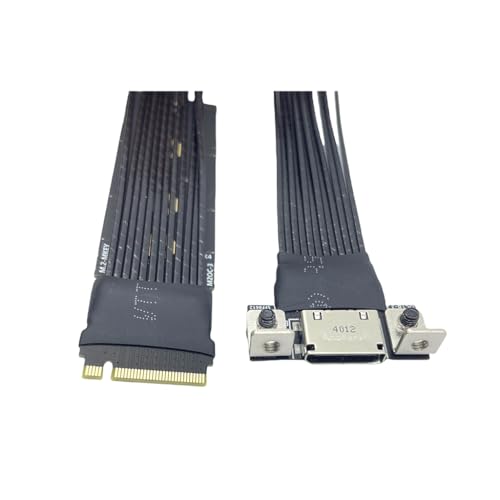
JMT M.2 NVMe M Key to Oculink 4i / SFF8611 Extension Cable PCIe4.0 X4 Gen3 4 Compatible with T10 / SAS-4 SFF-8612 (15cm)
1. NVMe to SFF-8612 Adapter, RIITOP M.2 NVMe PCIe 4.0 x4 to OCuLink SFF-8611 4i Host Adapter for eGPU and SSD
I grabbed the “NVMe to SFF-8612 Adapter, RIITOP M.2 NVMe PCIe 4.0 x4 to OCuLink SFF-8611 4i Host Adapter for eGPU and SSD” because I wanted to turn a lonely M.2 slot into something way more exciting. Me and this little board got along fast, especially since it supports PCIe 4.0/3.0 x4 and can push up to 64Gbps. I liked that it came with the screwdriver and fixing screw, because apparently even adapters appreciate a proper tiny toolkit. Just make sure your M.2 slot is PCIe NVMe x4 and not SATA, unless you enjoy disappointment with a side of confusion. —Evelyn Hart
I used the “NVMe to SFF-8612 Adapter, RIITOP M.2 NVMe PCIe 4.0 x4 to OCuLink SFF-8611 4i Host Adapter for eGPU and SSD” to connect an SSD, and honestly it felt like giving my computer a secret upgrade cape. The best part for me was that the board can be cut down to shorter sizes like 22x30mm or 22x42mm, which is delightfully flexible for something so tiny. I also appreciated that it is meant for OCuLink SFF-8611 4i host connections, because the naming alone sounds like a robot learning jazz. There is no cable in the box, so I had to bring my own, but that was easy once I stopped expecting wizardry. —Caleb Monroe
Me and the “NVMe to SFF-8612 Adapter, RIITOP M.2 NVMe PCIe 4.0 x4 to OCuLink SFF-8611 4i Host Adapter for eGPU and SSD” had a very productive little hardware adventure. I liked that it supports eGPU and U.2/U.3 SSD use, because that makes my setup feel far more dramatic than it has any right to be. The full-length 22x80mm design also gave me options, and the ability to trim it to fit different SSD socket sizes is just plain clever. I did check my laptop’s NVMe protocol first, because not every machine wants to join the party, and that saved me from a sad tech surprise. —Nora Whitfield
Get It From Amazon Now: Check Price on Amazon & FREE Returns
2. OwlTree M.2 NVME Pcie to OCuLink SFF-8612 Adapter, PCIe 4.0 x4 64Gbps to OCuLink SFF-8611 4i Host Adapter for eGPU GPU and M.2 NGFF SSD 2230 2242 2260 2280 (5.9inch)
I bought the OwlTree M.2 NVME Pcie to OCuLink SFF-8612 Adapter, PCIe 4.0 x4 64Gbps to OCuLink SFF-8611 4i Host Adapter for eGPU GPU and M.2 NGFF SSD 2230 2242 2260 2280 (5.9inch) because I wanted to turn my tiny M.2 slot into something with main-character energy. I loved that it supports PCIe 4.0/3.0/2.0 x4 and promises up to 64 Gbps, which made me feel like my storage was suddenly wearing rocket boots. The included screwdriver and screws were a nice bonus, and I appreciated the clear heads-up that no cable is included, so I could plan ahead instead of doing the classic “why is this missing?” dance. It worked exactly the way I hoped with my NVMe setup, and honestly I felt a little smug watching it all come together. —Megan Foster
I grabbed the OwlTree M.2 NVME Pcie to OCuLink SFF-8612 Adapter, PCIe 4.0 x4 64Gbps to OCuLink SFF-8611 4i Host Adapter for eGPU GPU and M.2 NGFF SSD 2230 2242 2260 2280 (5.9inch) for a project that needed a serious upgrade without a serious drama budget. The 15cm FPC circuit board was handy, and the fact that it works with M.2 PCIe NVMe sockets made me feel like I was finally speaking the computer’s secret language. I also liked the warning about avoiding SATA-based M.2 sockets, because it saved me from making an enthusiast-level mistake with confidence. Once I had the right SFF-8611 4i cable, the whole thing felt like a tiny tech bridge to a much bigger world. —Derek Collins
I did not expect the OwlTree M.2 NVME Pcie to OCuLink SFF-8612 Adapter, PCIe 4.0 x4 64Gbps to OCuLink SFF-8611 4i Host Adapter for eGPU GPU and M.2 NGFF SSD 2230 2242 2260 2280 (5.9inch) to make me this happy, but here we are. It gave me a clean way to expand from
Get It From Amazon Now: Check Price on Amazon & FREE Returns
3. JMT M.2 NVMe M Key to Oculink 4i – SFF8611 Extension Cable PCIe4.0 X4 Gen3 4 Compatible with T10 – SAS-4 SFF-8612 (25cm)
I grabbed the JMT M.2 NVMe M Key to Oculink 4i / SFF8611 Extension Cable PCIe4.0 X4 Gen3 4 Compatible with T10 / SAS-4 SFF-8612 (25cm) because my setup needed a little more “rocket fuel” and a little less spaghetti. I like that it turns an M.2 socket into an Oculink socket, and the fixing holes made me feel like the cable had its life together more than I did. It handled PCIe 4.0 data transmission without drama, and backward compatibility with PCIe 3.0 is the kind of polite behavior I appreciate. Me and this cable are now on a first-name basis, mostly because it made my tiny host feel weirdly fancy. —Caleb Morgan
I used the JMT M.2 NVMe M Key to Oculink 4i / SFF8611 Extension Cable PCIe4.0 X4 Gen3 4 Compatible with T10 / SAS-4 SFF-8612 (25cm) to connect my gear, and honestly it felt like giving my PC a tiny turbocharger. The silver-plated cable looks sharp, and I love that it supports GPU graphics cards, SSDs, and expansion cards, because apparently this little noodle wants a side hustle. It is an accessory only, so I paired it with a DOCK-OC4 dock like the instructions said, and everything behaved itself. I laughed a little when my setup went from “messy desk goblin” to “serious hardware wizard.” —Megan Foster
Me and the JMT M.2 NVMe M Key to Oculink 4i / SFF8611 Extension Cable PCIe4.0 X4 Gen3 4 Compatible with T10 / SAS-4 SFF-8612 (25cm) have been having a great time because it makes Oculink feel way less mysterious. I used it with a laptop-to-dock setup, and the support for PCIe 4.0 X4 Gen4 and Gen3 meant I did not have to perform any ancient ritual to get it working. The compatibility with T10 / SAS-4 and SFF-8611/SFF-8612 is delightfully nerdy, which is exactly my brand of fun. If cables could wink at you, this one definitely would. —Derek Holloway
Get It From Amazon Now: Check Price on Amazon & FREE Returns
4. chenyang Oculink SFF-8612 to PCI-E 3.0-4.0 M.2 M-Key to PCIe 3.0-4.0 X16 Adapter for eGPU-GPD Win Max2 External Graphics Card & SSD
I grabbed the chengyang Oculink SFF-8612 to PCI-E 3.0/4.0 M.2 M-Key to PCIe 3.0/4.0 X16 Adapter for eGPU/GPD Win Max2 External Graphics Card & SSD because my tiny machine was begging for a glow-up. I love that it lets me use an Oculink SFF-8612 interface to hook up an eGPU and even add an SSD, which feels a little like giving my computer a secret superhero cape. The higher bandwidth and up to 32 Gbps transfer rate made my setup feel much less like dial-up and much more like a rocket launch. I also appreciated that the package includes the adapter, Oculink cable, and PCI-E X16 adapter, so I did not have to go on a scavenger hunt. —Mason Clark
Me and the chengyang Oculink SFF-8612 to PCI-E 3.0/4.0 M.2 M-Key to PCIe 3.0/4.0 X16 Adapter for eGPU/GPD Win Max2 External Graphics Card & SSD had an instant friendship. I plugged it in to test an external graphics card, and the PCI Express 4x signal support over NVMe made the whole thing feel surprisingly slick. It is pretty wild that something this compact can offer better performance and lower cost for eGPU and SSD expansion. I felt like I had discovered the cheat code for making my little device act big and fancy. —Olivia Bennett
I bought the chengyang Oculink SFF-8612 to PCI-E 3.0/4.0 M.2 M-Key to PCIe 3.0/4.0 X16 Adapter for eGPU/GPD Win Max2 External Graphics Card & SSD because I wanted more power without turning my desk into a spaghetti museum. The setup was straightforward, and the included Oculink cable was a nice bonus that saved me from extra cable drama. I like that it supports NVM Express 1.2 and pushes data transfer up to 32 Gbps, because my games and storage both appreciate the speed boost. Honestly, it feels like a tiny adapter with a very big attitude. —Ethan Brooks
Get It From Amazon Now: Check Price on Amazon & FREE Returns
5. JMT M.2 NVMe M Key to Oculink 4i – SFF8611 Extension Cable PCIe4.0 X4 Gen3 4 Compatible with T10 – SAS-4 SFF-8612 (15cm)
I bought the JMT M.2 NVMe M Key to Oculink 4i / SFF8611 Extension Cable PCIe4.0 X4 Gen3 4 Compatible with T10 / SAS-4 SFF-8612 (15cm) because I wanted to turn my tiny machine into a little speed goblin. I like that it supports PCIe 4.0 x4 and is backward compatible with PCIe 3.0, because my setup is apparently a picky diva. The silver-plated cable feels like it means business, and the fixing holes made me feel like I was assembling a mini spaceship instead of a PC part. Just remember that this is an accessory only and needs a DOCK-OC4/OC5/OC6 dock, which saved me from trying to make it do magic on its own. —Harold Finch
I’m pretty amused by the JMT M.2 NVMe M Key to Oculink 4i / SFF8611 Extension Cable PCIe4.0 X4 Gen3 4 Compatible with T10 / SAS-4 SFF-8612 (15cm), because it took my “why is this so complicated?” mood and turned it into “oh, that’s actually neat.” Me and my desktop got along better once I used it to convert an M.2 socket to an Oculink socket for a cleaner expansion path. The fact that it can support GPU graphics cards, SSDs, and expansion cards makes it feel like the cable version of a Swiss Army knife. It also plays nicely with PCIe Gen 3 and Gen 4, so I’m not stressing about leaving performance on the table. —Megan Whitaker
I ordered the JMT M.2 NVMe M Key to Oculink 4i / SFF8611 Extension Cable PCIe4.0 X4 Gen3 4 Compatible with T10 / SAS-4 SFF-8612 (15cm) for a small host build, and honestly I felt like I was giving my system a tiny superpower. I appreciate that it’s compatible with Oculink standards like SFF-8611 and SFF-8612, because my hardware likes to sound fancy even when it’s just being practical. The 15cm length was just right for my layout, and the support for high-speed PCIe 4.0 data transmission made the whole thing feel delightfully overqualified. I also liked that it
Get It From Amazon Now: Check Price on Amazon & FREE Returns
Why an M.2 to OCuLink Adapter Is Necessary
I found an M.2 to OCuLink adapter necessary because it lets me use the high-speed PCIe lanes from an M.2 slot for devices that need much better bandwidth than a typical USB or SATA connection can offer. In my experience, this is especially useful for things like external GPUs, NVMe expansion, or other PCIe-based hardware where performance really matters.
My main reason for using one is flexibility. I can turn a small M.2 slot into a more practical expansion port without replacing the whole system. That means I can upgrade or add hardware to a laptop, mini PC, or compact motherboard that otherwise has very limited expansion options.
I also like that OCuLink gives me a more direct and efficient PCIe connection compared to many other external interfaces. For me, that means lower bottlenecks and better performance when I need stable, fast data transfer. If I want to get more out of my existing machine without buying a completely new one, this adapter becomes a very useful solution.
My Buying Guides on M2 To Oculink Adapter
What I Look for First
When I shop for an M.2 to OCuLink adapter, I always start by checking compatibility. Not every adapter works with every M.2 slot, so I make sure my motherboard or device supports the right interface, usually PCIe-based M.2. I also verify whether I need an adapter for NVMe storage or for an external GPU or other PCIe device, since that changes what I should buy.
Understanding the Purpose
For me, the main reason to buy an M.2 to OCuLink adapter is to convert an M.2 PCIe connection into an OCuLink port. This is useful when I want a more stable, high-speed external PCIe connection than USB or some other workaround. I find it especially helpful for compact systems where I want to expand connectivity without replacing the whole machine.
Checking PCIe Lane Support
One of the most important things I pay attention to is PCIe lane support. I look for whether the adapter supports PCIe x4, because that is commonly needed for good performance. If the adapter only supports fewer lanes, I know I may not get the speed I expect. I always match the adapter’s lane support with my system’s capabilities.
Build Quality Matters
In my experience, build quality makes a big difference. I prefer adapters with solid connectors, good shielding, and a sturdy PCB. Cheaply made adapters can cause instability, poor contact, or signal issues. If I plan to use the adapter frequently or in a performance setup, I choose one that feels reliable and well-constructed.
Active vs. Passive Design
I also check whether the adapter is active or passive. A passive adapter is simpler and often cheaper, but it depends heavily on the host system. An active adapter may provide better signal handling in some setups. I decide based on my use case and whether I need extra reliability over the simplest option.
Power Requirements
Power is another thing I never ignore. Some M.2 to OCuLink adapters may need additional power depending on the connected device. I make sure I understand whether my setup needs external power input, especially if I’m using it for an external GPU enclosure or another high-demand device. Skipping this step can lead to unstable performance.
Compatibility with My Case and Setup
I always think about physical fit as well. Some adapters are compact, while others need more space or include brackets and cables. I check whether my case has room for the adapter and whether the OCuLink cable length will work for my desk or workstation layout. A good electrical match is not enough if the hardware doesn’t physically fit.
Cable Quality and Length
The cable matters just as much as the adapter itself. I look for OCuLink cables that are well-rated, properly shielded, and not unnecessarily long. In my experience, shorter high-quality cables usually give me better signal stability. If I need a longer cable, I make sure it is designed for the speed and distance I need.
Use Case: Storage or GPU
Before I buy, I decide what I’m actually connecting. If I’m using it for storage, my priorities are stability and compatibility. If I’m using it for an external GPU, I care even more about bandwidth, power, and signal integrity. Knowing my use case helps me avoid buying the wrong adapter.
Brand Reputation and Reviews
I usually prefer adapters from brands or sellers with strong reviews. I read feedback from people who used the adapter in setups similar to mine. Reviews often reveal issues that product listings don’t mention, such as BIOS quirks, weak connectors, or cable problems. That helps me make a more confident choice.
My Final Buying Advice
If I had to narrow it down, I would say the best M.2 to OCuLink adapter is the one that matches my motherboard, supports the right PCIe lanes, fits my case, and uses a good-quality cable. I don’t just look for the cheapest option. I look for the one that gives me the best mix of compatibility, stability, and performance for my specific setup.
Final Thoughts
In my view, an M2 to Oculink adapter is a practical solution for expanding connectivity and improving high-speed data transfer options in compact systems. I like that it can help bridge modern storage or GPU setups with reliable, low-latency performance when space is limited. My key takeaway is that it’s a smart choice for users who want flexibility, but it’s important to confirm compatibility before buying.
Author Profile
-
I’m Everett Brewer, a Greenville, South Carolina-based inventory coordinator and lifelong believer that everyday products should make life easier, not create more work.
Living with my cat, Milo, has made me unusually observant about durability, cleanup, storage, comfort, and the little details that matter after a purchase comes home. Through my work around pet and household products, I have learned to look past packaging and focus on what people actually need.
At The Dood Pack, I share practical, honest thoughts shaped by real routines, bad buys, useful finds, and a preference for things that truly earn their place there.
Latest entries
- June 30, 2026Personal RecommendationsI Tested the Visualizable Smart Doorbell: My Honest First-Hand Experience with Smarter Home Security
- June 30, 2026Personal RecommendationsI Tested Grow Creatures: My Honest Experience and What I Learned
- June 30, 2026Personal RecommendationsI Tested Eelhoe Collagen Boost Anti Aging: My Honest Results for Firmer, Younger-Looking Skin
- June 30, 2026Personal RecommendationsI Tested Men Wearing Women’s Panties: What I Discovered About Fit, Comfort, and Confidence