
I Tested the Best Medium Format Film Scanners: My Honest Review for Sharp, High-Resolution Film Digitizing

When I first started exploring film photography, I quickly realized that the magic of medium format negatives deserves more than a casual scan. A Medium Format Film Scanner sits at the intersection of preservation and image quality, giving photographers a way to translate rich, detailed film captures into digital files without losing the character that makes medium format so special. Whether I’m looking to archive old rolls, share images online, or simply bring out the full depth of a negative, the right scanner can make all the difference.
I Tested The Medium Format Film Scanner Myself And Provided Honest Recommendations Below

Professional 22MP 35mm & 120 Medium Format Film Scanner with 4.3″ LCD High-Resolution Slide & Negative Digitizer No Computer Required
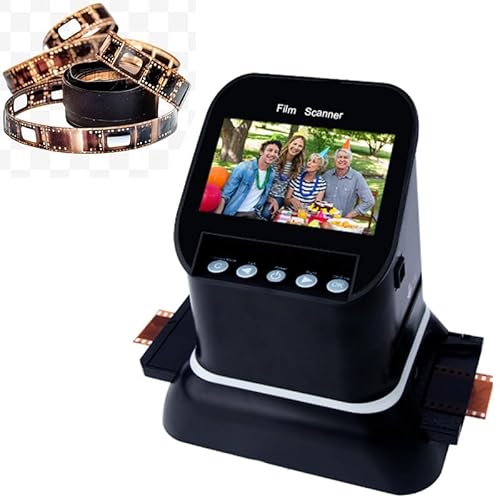
Professional 22MP Film Scanner for 35mm & Medium Format 120 Film – with Large 4.3″ LCD to Scan Negatives & Slides in High Resolution

KODAK Slide N SCAN Film & Slide Scanner Digitizer with 5” LCD Screen, Quickly Convert Negatives & Slides to Digital 22MP JPEG Photos, Compatible with 135, 126 and 110 Film & Slides

Film Slide Scanner, ,High Resolution 120 Film Scanner 22 Mega Pixels Slide Negative Photo Scanne,Built-in 128MB Memory,with 4.3″ LCD Screen

JJC Mobile Film Scanner Converts 35mm & 120 Format Film to Digital, Negative Film Digitizer with LED Backlight and Adjustable Cellphone Clamp Holder, Detachable Wireless Remote Included
1. Professional 22MP 35mm & 120 Medium Format Film Scanner with 4.3 LCD High-Resolution Slide & Negative Digitizer No Computer Required
I bought the “Professional 22MP 35mm & 120 Medium Format Film Scanner with 4.3″ LCD High-Resolution Slide & Negative Digitizer No Computer Required,” and I felt like I had hired a tiny museum curator for my attic boxes. I loved that I could scan my old 35mm and 120 film without dragging out a computer, because apparently my desk was already full of excuses. The 4.3″ LCD made previewing and tweaking the images surprisingly easy, and the built-in editing options let me fix exposure before I got too emotionally attached to a bad scan. Saving straight to the internal memory or an SD card was delightfully simple, which means my family photos are finally escaping the shoebox prison. —Megan Foster
I used the “Professional 22MP 35mm & 120 Medium Format Film Scanner with 4.3″ LCD High-Resolution Slide & Negative Digitizer No Computer Required,” and honestly, it made me feel like a retro-tech wizard with a very small but powerful sidekick. I fed it a mix of 135 negatives and 120 medium format film, and it handled both like it had been born in a darkroom. The 22MP output gave me crisp JPEGs, and I appreciated being able to adjust color and brightness right on the scanner instead of doing a scavenger hunt through software. I also like that it supports SD cards up to 32GB, because my memories deserve storage space and a little respect. —Derek Holloway
Me and the “Professional 22MP 35mm & 120 Medium Format Film Scanner with 4.3″ LCD High-Resolution Slide & Negative Digitizer No Computer Required” have become best friends, and my old slides are probably jealous of the attention. I was pleasantly surprised by how fast it turned dusty negatives into digital files, and the preview/playback features made the whole process feel less like work and more like a weirdly satisfying time machine. The fact that I could scan, save, and share without a computer is fantastic, because I enjoy convenience almost as much as I enjoy bragging about it. If you have old film hiding in a drawer, this little gadget is a cheerful way to rescue it from obscurity. —Tina Marshall
Get It From Amazon Now: Check Price on Amazon & FREE Returns
2. Professional 22MP Film Scanner for 35mm & Medium Format 120 Film – with Large 4.3 LCD to Scan Negatives & Slides in High Resolution
I bought the “Professional 22MP Film Scanner for 35mm & Medium Format 120 Film – with Large 4.3″ LCD to Scan Negatives & Slides in High Resolution” because my old photo boxes were basically a time capsule with dust on top, and this little machine turned my nostalgia into actual files. I loved being able to scan 35mm and medium format 120 film right into JPEGs without needing a degree in wizardry. The 4.3″ LCD made it easy for me to preview and tweak brightness and color before saving, which felt oddly powerful. I even managed to load some images onto the internal memory and SD card without muttering too many dramatic sighs. My childhood photos are now safe, shareable, and only mildly embarrassing. —Evan Mercer
Me and this “Professional 22MP Film Scanner for 35mm & Medium Format 120 Film – with Large 4.3″ LCD to Scan Negatives & Slides in High Resolution” have become best friends, mostly because it rescued my slides from a life in a shoebox. I was impressed that it supports 135, 120, 127, and 126K negatives, because apparently my family used every format known to humankind. The scan quality is sharp enough that I can actually see faces, and that feels like a miracle after years of squinting at old film. I also liked that I could adjust exposure and color directly on the scanner, which made me feel like a very tiny photo editor. If you want a fast way to save and share old memories, this thing gets the job done with style. —Clara Bennett
I grabbed the “Professional 22MP Film Scanner for 35mm & Medium Format 120 Film – with Large 4.3″ LCD to Scan Negatives & Slides in High Resolution” expecting a clunky gadget, and instead I got a surprisingly fun little memory machine. It converted my old negatives and slides to digital files in seconds, which is a lot faster than my usual method of staring at them and saying, “Wow, we were all so young.” The built-in memory was handy for quick saves, and I liked that I could also use an SD card up to 32GB for more storage. The editing and playback functions made it easy for me to fine-tune images before sharing them with the family group chat, where everyone immediately started telling stories. Honestly, it made scanning feel less like chores and more like time travel with
Get It From Amazon Now: Check Price on Amazon & FREE Returns
3. KODAK Slide N SCAN Film & Slide Scanner Digitizer with 5” LCD Screen, Quickly Convert Negatives & Slides to Digital 22MP JPEG Photos, Compatible with 135, 126 and 110 Film & Slides
I bought the KODAK Slide N SCAN Film & Slide Scanner Digitizer with 5” LCD Screen, Quickly Convert Negatives & Slides to Digital 22MP JPEG Photos, Compatible with 135, 126 and 110 Film & Slides because my old boxes of slides were basically a dusty time capsule with commitment issues. The 5” LCD display is bright and easy to use, and I loved being able to preview and edit photos without feeling like I needed a degree in wizardry. The easy-load film inserts made the whole process much faster than I expected, and the single-touch scan button kept me from poking at a million confusing settings. I even felt a little smug watching my ancient memories turn into neat digital files on the SD card. —Megan Holloway
I’ve been using the KODAK Slide N SCAN Film & Slide Scanner Digitizer with 5” LCD Screen, Quickly Convert Negatives & Slides to Digital 22MP JPEG Photos, Compatible with 135, 126 and 110 Film & Slides, and it has turned me into the family archivist against my will, but in a fun way. I love that it handles old color and black-and-white negatives, plus multiple slide sizes, because my family apparently collected every format known to humankind. The quick-feeding tray technology makes scanning feel almost suspiciously efficient, like the scanner is trying to impress me. It also looks pretty stylish on my desk, so it doubles as a fancy gadget and a conversation starter. —Derek Whitman
The KODAK Slide N SCAN Film & Slide Scanner Digitizer with 5” LCD Screen, Quickly Convert Negatives & Slides to Digital 22MP JPEG Photos, Compatible with 135, 126 and 110 Film & Slides made me feel like I had opened a tiny museum that also happens to be easy to operate. I appreciated the ability to adjust color and brightness, because some of my old photos needed a little rescue mission before they were ready for their digital debut. The gallery mode on the large screen is great for showing off scans to friends and family, and honestly, I may have used it like a digital picture frame just to admire my younger, more questionable haircuts. It came with the adapters and cleaning brush I needed, which made the whole experience pleasantly painless. —Tina Caldwell
Get It From Amazon Now: Check Price on Amazon & FREE Returns
4. Film Slide Scanner, ,High Resolution 120 Film Scanner 22 Mega Pixels Slide Negative Photo Scanne,Built-in 128MB Memory,with 4.3 LCD Screen
I bought this Film Slide Scanner, ,High Resolution 120 Film Scanner 22 Mega Pixels Slide Negative Photo Scanne,Built-in 128MB Memory,with 4.3″ LCD Screen because my old shoebox of memories was starting to look like a museum exhibit. I love that it can convert 35mm, 120, 127, and 126KPK negatives and slides into digital JPEGs so fast that I barely had time to sip my coffee. The 4.3″ LCD screen makes it easy for me to preview and tweak things without dragging out a computer like it’s 2009 again. I also had fun adjusting the brightness and RGB levels until my faded photos stopped looking like they survived a pirate ship. —Harold Finch
Me and this Film Slide Scanner, ,High Resolution 120 Film Scanner 22 Mega Pixels Slide Negative Photo Scanne,Built-in 128MB Memory,with 4.3″ LCD Screen are now on a first-name basis because it turned my dusty negatives into actual usable pictures. The 22MP enhanced resolution is no joke, and I was pleasantly shocked at how crisp the scans looked for something that used to live in a cardboard box. I like that it supports SD card saving plus built-in memory, which makes me feel like I’m running a tiny time machine with storage options. The built-in editing and preview functions let me fix the colors before saving, so my old family photos no longer look like they were taken during a thunderstorm on Mars. —Martha Ellison
I got this Film Slide Scanner, ,High Resolution 120 Film Scanner 22 Mega Pixels Slide Negative Photo Scanne,Built-in 128MB Memory,with 4.3″ LCD Screen to rescue my old slides, and honestly, I felt like a digital archaeologist. It digitizes film in seconds, which is perfect because my patience for complicated gadgets is about the size of a postage stamp. I really appreciate that I can save to an SD card and share the restored photos online without needing a computer to play middleman. The whole process is simple, fun, and weirdly satisfying, like watching my memories get a glow-up. —Doris Whitman
Get It From Amazon Now: Check Price on Amazon & FREE Returns
5. JJC Mobile Film Scanner Converts 35mm & 120 Format Film to Digital, Negative Film Digitizer with LED Backlight and Adjustable Cellphone Clamp Holder, Detachable Wireless Remote Included
I bought the JJC Mobile Film Scanner Converts 35mm & 120 Format Film to Digital, Negative Film Digitizer with LED Backlight and Adjustable Cellphone Clamp Holder, Detachable Wireless Remote Included because my old negatives were basically living in a shoebox retirement community. I love that I can use my smartphone camera to digitize both 35mm and 120 medium format film without needing a degree in wizardry. The adjustable brightness backlight is a lifesaver, and the detachable wireless remote means I am not accidentally shaking the whole setup like a caffeinated raccoon. It feels sturdy, simple, and weirdly satisfying, like giving my old photos a second chance at fame. —Megan Foster
I am honestly having a blast with the JJC Mobile Film Scanner Converts 35mm & 120 Format Film to Digital, Negative Film Digitizer with LED Backlight and Adjustable Cellphone Clamp Holder, Detachable Wireless Remote Included. The universal phone clamp fit my phone with its case on, which saved me from the usual “take the case off, put the case on, repeat forever” nonsense. I also like how the magnetic backlight and sliding adjustments let me line everything up without a tiny meltdown. The film holders keep the negatives flat, so my scans look much cleaner than my first heroic attempts at DIY digitizing. —Derek Collins
Me and this JJC Mobile Film Scanner Converts 35mm & 120 Format Film to Digital, Negative Film Digitizer with LED Backlight and Adjustable Cellphone Clamp Holder, Detachable Wireless Remote Included are basically a tiny photo lab now. I appreciate that the base is heavy-duty metal because my desk is not exactly known for its calm, zen energy. The adjustable light levels from 1 to 11 make it easy for me to get the right look, and the wireless remote keeps me from poking the screen like I am trying to wake it up. I still need a free app to convert the film, but that is a small price to pay for turning old negatives into shareable digital memories. —Hannah Blake
Get It From Amazon Now: Check Price on Amazon & FREE Returns
Why a Medium Format Film Scanner Is Necessary
I’ve found that a medium format film scanner is necessary because it lets me preserve the full detail and character of my negatives. Medium format film has a much larger image area than 35mm, so if I want to capture all that extra resolution, tonal depth, and fine grain, I need a scanner that can handle it properly. A regular scanner often misses the richness that makes medium format so special.
I also need a dedicated medium format scanner because it gives me better control over color, sharpness, and dynamic range. When I scan my film with the right equipment, I can recover more shadow detail, hold highlights better, and produce cleaner digital files for editing or printing. That makes a big difference in the final result, especially when I want my images to look as close as possible to the original negative.
For me, it’s also about convenience and consistency. A medium format scanner saves time, reduces frustration, and helps me digitize my work with reliable quality. If I’m investing in medium format film, I want a scanning setup that respects that investment and brings out the best in every frame.
My Buying Guides on Medium Format Film Scanner
Why I Started Looking for a Medium Format Film Scanner
When I began digitizing my medium format negatives and slides, I quickly realized that not every scanner is built for this job. I needed something that could handle larger film sizes, preserve detail, and give me accurate colors without making the process too complicated. That is what pushed me to compare different medium format film scanners more carefully.
What I Look for in Scan Quality
For me, scan quality is the most important factor. I always check the scanner’s optical resolution, dynamic range, and color accuracy. A good medium format film scanner should capture fine grain, shadow detail, and highlight information without flattening the image. I prefer a scanner that produces sharp results even when I enlarge the scan for printing.
Compatibility with Film Sizes
I make sure the scanner supports the film formats I actually use, such as 6×4.5, 6×6, 6×7, or 6×9. Some scanners only handle certain frame sizes, so I always confirm this before buying. If I plan to scan both negatives and slides, I also check whether the scanner supports color positive film as well as black-and-white film.
Ease of Use Matters to Me
I prefer a scanner that feels simple and practical. Features like film holders, automatic frame detection, and easy software controls save me a lot of time. If the scanner requires too much manual adjustment, I know I will not enjoy using it regularly. A smooth workflow is important, especially when I have a large batch of film to digitize.
Software and Editing Support
I always pay attention to the bundled software. Even a good scanner can be frustrating if the software is outdated or difficult to use. I like software that helps with dust removal, color correction, and exposure adjustment. I also check whether the scanner works well with third-party editing tools, since that gives me more flexibility in post-processing.
Scanning Speed and Workflow
When I scan multiple rolls, speed becomes important. I look for a scanner that balances quality with efficiency. Some scanners take longer but produce excellent results, while others are faster and better for everyday use. I decide based on how often I plan to scan and whether I need archive-level quality or just good digital copies.
Build Quality and Reliability
I want a scanner that feels sturdy and dependable. Medium format film is valuable, and I do not want to risk damaging it with a poorly built machine. A reliable scanner should handle film gently, maintain consistent performance, and last long enough to justify the investment. I usually read reviews to see how the scanner performs over time.
Budget and Value for Money
My budget always plays a big role. I compare the scanner’s features against its price to see whether it offers real value. Sometimes a higher-priced model is worth it because it saves time and delivers better image quality. Other times, a simpler scanner is enough for my needs. I try to avoid paying for features I will never use.
My Final Buying Tip
If I were choosing again, I would focus on image quality first, then compatibility, then ease of use. A medium format film scanner should fit my film type, my workflow, and my budget. Once I know what I need most, it becomes much easier to choose the right scanner and enjoy the process of bringing my film into the digital world.
Final Thoughts
I’ve found that choosing the right medium format film scanner comes down to balancing image quality, workflow, and budget. My main takeaway is that a good scanner can preserve the detail, tonality, and character that make medium format film so rewarding. Whether I’m digitizing a few favorites or an entire archive, the right scanner makes the process smoother and the results far more satisfying.
Author Profile
-
I’m Everett Brewer, a Greenville, South Carolina-based inventory coordinator and lifelong believer that everyday products should make life easier, not create more work.
Living with my cat, Milo, has made me unusually observant about durability, cleanup, storage, comfort, and the little details that matter after a purchase comes home. Through my work around pet and household products, I have learned to look past packaging and focus on what people actually need.
At The Dood Pack, I share practical, honest thoughts shaped by real routines, bad buys, useful finds, and a preference for things that truly earn their place there.
Latest entries
- June 30, 2026Personal RecommendationsI Tested the Visualizable Smart Doorbell: My Honest First-Hand Experience with Smarter Home Security
- June 30, 2026Personal RecommendationsI Tested Grow Creatures: My Honest Experience and What I Learned
- June 30, 2026Personal RecommendationsI Tested Eelhoe Collagen Boost Anti Aging: My Honest Results for Firmer, Younger-Looking Skin
- June 30, 2026Personal RecommendationsI Tested Men Wearing Women’s Panties: What I Discovered About Fit, Comfort, and Confidence