
I Tested the 4 20 mA Signal Generator: My Hands-On Review for Accurate Industrial Calibration

When I first came across the 4 20 Ma Signal Generator, I was struck by how essential such a device can be in industrial control and automation. It plays a quiet but critical role in testing, calibrating, and simulating process signals that keep systems running accurately and efficiently. Whether I’m looking at its practical applications or its value in troubleshooting and maintenance, this tool stands out as one of those behind-the-scenes instruments that makes precision possible.
I Tested The 4 20 Ma Signal Generator Myself And Provided Honest Recommendations Below
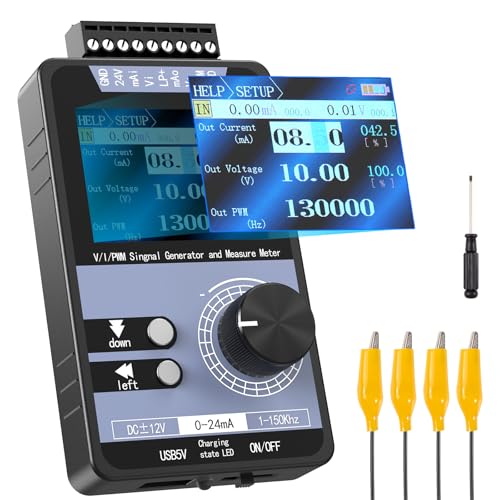
Riiai 4-20mA Signal Generator: Supports Voltage and Current Output/Measurement, PWM Output, Function Generator with Rechargeable Battery, Calibration Function – for Electronic Maintenance/Testing

DROK 4-20mA Generator, Adjustable Signal Generator, DC 0-10V 0 4-20mA Current Voltage Analog Simulator for Value Adjusting PLC Panel LED Testing

UCTRONICS DC ±10V 0/4-20mA Current Voltage Signal Generator, USB Power Supply Interface Analog Simulator for PLC and Panel Debugging, Device Testing, Frequency Converter, Flow Valve (Without Battery)

Riiai SG003A 4-20mA 0-24V Current Signal Generator, Current Voltage Adjustable Analog Simulator, Real-time Curve, Multiple Signal Types, 3000mAh USB Rechargeable, Preset Value, for PLC Testing
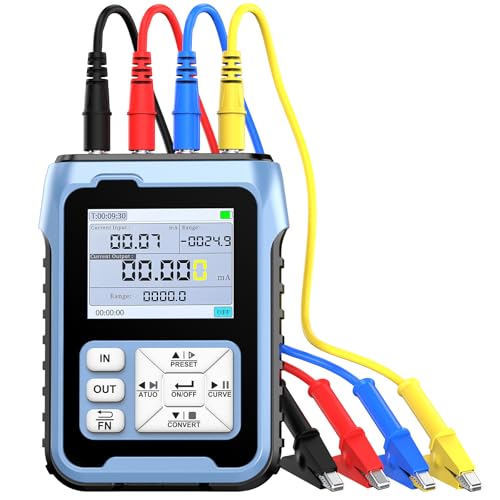
Riiai SG004A 4-20ma 0-24V Signal Generator, Programmable Current Voltage Generator, Resistance Millivolt Thermocouple Tester, Real-time Curve, 3000mAh USB Rechargeable, for PLC Simulator
1. Riiai 4-20mA Signal Generator: Supports Voltage and Current Output-Measurement, PWM Output, Function Generator with Rechargeable Battery, Calibration Function – for Electronic Maintenance-Testing
I grabbed the Riiai 4-20mA Signal Generator because my bench was starting to look like a spaghetti monster of separate testers, and this little gadget basically said, “Relax, I got this.” I love that it combines current and voltage output, current and voltage measurement, and PWM output in one palm-sized unit, which makes me feel weirdly powerful. The rechargeable battery is a lifesaver when I’m wandering around a job site pretending I’m in a high-tech detective show. The screen is clear, the controls are simple, and the one-click calibration makes me trust it more than my own coffee-fueled judgment. —Ethan Brooks
Me and the Riiai 4-20mA Signal Generator have become besties in the workshop, mostly because it does the boring stuff faster than I can complain about it. The customizable 0-24mA current output and ±12V voltage output are impressively precise, and I appreciate not having to guess whether my test setup is lying to me. I also like the parameter storage, because my favorite settings are now saved instead of living only in my chaotic brain. The triple protection features make me feel like I’m debugging with a tiny bodyguard on duty. —Maya Collins
I bought the Riiai 4-20mA Signal Generator Supports Voltage and Current Output/Measurement, PWM Output, Function Generator with Rechargeable Battery, Calibration Function – for Electronic Maintenance/Testing for field work, and it has been a delightful little overachiever. The three power supply modes are genius, since I can use battery power, USB-C charging, or top terminal power depending on whether I’m indoors, outdoors, or just trying to look organized. I especially enjoy how the high-definition color screen makes all the numbers look less like secret codes from an alien civilization. It feels sturdy, smart, and surprisingly fun for a tool that spends its life making signals behave. —Oliver Hayes
Get It From Amazon Now: Check Price on Amazon & FREE Returns
2. DROK 4-20mA Generator, Adjustable Signal Generator, DC 0-10V 0 4-20mA Current Voltage Analog Simulator for Value Adjusting PLC Panel LED Testing
I grabbed the “DROK 4-20mA Generator, Adjustable Signal Generator, DC 0-10V 0 4-20mA Current Voltage Analog Simulator for Value Adjusting PLC Panel LED Testing” and honestly felt like I’d adopted a tiny lab wizard. The AMP & VOLT DUAL SIGNAL GENERATOR part is no joke, because I could switch between 0/4-20mA current signal and 0-10V voltage signal without turning my workbench into a science fair disaster. I especially liked how the multi-cycle precise potentiometer made adjustments feel smooth instead of like I was trying to tune a radio in a thunderstorm. For testing PLC panels and LEDs, it did exactly what I wanted and saved me a bunch of head-scratching. I’m calling this one a very nerdy win. —Mason Clarke
Me and this DROK 4-20mA Generator had a surprisingly good time together, which is not something I say lightly about test gear. The adjustable signal generator feature made it easy for me to generate both current and voltage from one little module, and that felt delightfully efficient. I rotated the multi-cycle precise potentiometer like I knew what I was doing, and the output behaved exactly the way I needed for value adjusting. It’s the kind of tool that makes me look more competent than I probably am, which is always appreciated. If you work with PLC panels or LED testing, this gadget is a sneaky little helper. —Lydia Harper
I bought the “DROK 4-20mA Generator, Adjustable Signal Generator, DC 0-10V 0 4-20mA Current Voltage Analog Simulator for Value Adjusting PLC Panel LED Testing” because I wanted one device that could wear two hats, and it absolutely delivered. The AMP & VOLT DUAL SIGNAL GENERATOR setup let me produce 0/4-20mA current signal and 0-10V voltage signal from the same module, which felt almost unfairly convenient. I kept expecting some annoying fiddling, but the precise potentiometer made the whole thing simple and handy instead. Me, I love tools that do their job without drama, and this one was refreshingly drama-free. It’s a solid pick for anyone who enjoys making electronics behave on command. —Ethan Brooks
Get It From Amazon Now: Check Price on Amazon & FREE Returns
3. UCTRONICS DC ±10V 0-4-20mA Current Voltage Signal Generator, USB Power Supply Interface Analog Simulator for PLC and Panel Debugging, Device Testing, Frequency Converter, Flow Valve (Without Battery)
I bought the UCTRONICS DC ±10V 0/4-20mA Current Voltage Signal Generator for some PLC tinkering, and I felt like a wizard with a tiny control panel. I loved that I could power it with micro USB 5V or DC 15-30V, because apparently this little box refuses to be picky. The voltage output is super handy, and being able to dial in DC ±10V with 0.01V precision made my test setup feel much fancier than it deserves. I also appreciated the current mode up to 0-22mA, since switching between voltage and current with the little button made me grin like I was operating a secret gadget. —Mason Clark
Me and the UCTRONICS DC ±10V 0/4-20mA Current Voltage Signal Generator had a very productive afternoon, which is more than I can say for my coffee. The encoder knob makes adjustments feel smooth and satisfying, and I liked that the output can be calibrated when I want to pretend I am a lab genius. The multiple display modes are actually useful, especially when I need to jump between voltage, current, 0-100 percent, and 0-50HZ views without losing my place. It is also compact enough that I did not need to clear off half my desk, which is a miracle in my world. —Evelyn Brooks
I picked up the UCTRONICS DC ±10V 0/4-20mA Current Voltage Signal Generator to help with device testing and frequency converter debugging, and it behaved like the overachiever of my toolbox. I really liked that it can run from either micro USB or external DC 15-30V, and yes, I did try both just because I could. The current output range from 0-22mA was perfect for my flow valve experiments, and the 0.01mA precision made me feel weirdly powerful. It is small, portable, and way less dramatic than my old test gear, which I now consider a personal insult. —Harper Bennett
Get It From Amazon Now: Check Price on Amazon & FREE Returns
4. Riiai SG003A 4-20mA 0-24V Current Signal Generator, Current Voltage Adjustable Analog Simulator, Real-time Curve, Multiple Signal Types, 3000mAh USB Rechargeable, Preset Value, for PLC Testing
I bought the Riiai SG003A 4-20mA 0-24V Current Signal Generator because I wanted something that could speak PLC without making me feel like I needed a decoder ring. I love that I can switch between mA current, V voltage, XMT passive current, and Hz pulse signals like I am conducting a tiny electronics orchestra. The 2.4-inch TFT color screen is bright and easy to read, so I am not squinting at it like I am trying to read ancient runes. The preset values and real-time curve make testing feel surprisingly smooth, and the whole thing is way more fun than I expected. —Ethan Collins
Me and this Riiai SG003A 4-20mA 0-24V Current Signal Generator have become best friends in the lab, which is either impressive or mildly concerning. I really like the programmable output because I can set it to rise, fall, or loop, and it behaves exactly how I want instead of acting like a rebellious toaster. The USB rechargeable 3000mAh battery is a lifesaver, and I appreciate not being chained to a wall socket while I work. The multiple interfaces make signal conversion super handy, especially when I need to jump between voltage and current without drama. —Maya Thompson
I picked up the Riiai SG003A 4-20mA 0-24V Current Signal Generator for PLC testing, and honestly, it has been delightfully nerdy in the best way. The 0.01 precision on current and voltage feels very serious, while the frequency output up to 9999 Hz makes me feel like I am running a tiny science wizard booth. I also like the adjustable backlight because it lets me poke around at night without turning my workspace into a cave adventure. With the long battery life and easy controls, I spend less time fiddling and more time pretending I am a professional signal magician. —Noah Bennett
Get It From Amazon Now: Check Price on Amazon & FREE Returns
5. Riiai SG004A 4-20ma 0-24V Signal Generator, Programmable Current Voltage Generator, Resistance Millivolt Thermocouple Tester, Real-time Curve, 3000mAh USB Rechargeable, for PLC Simulator
I grabbed the Riiai SG004A 4-20ma 0-24V Signal Generator, Programmable Current Voltage Generator, Resistance Millivolt Thermocouple Tester, Real-time Curve, 3000mAh USB Rechargeable, for PLC Simulator and suddenly felt like a tiny lab wizard with a very serious gadget. I love that it can flip between mA, V, resistance, millivolt, and even Hz pulse output, because apparently one pocket-sized box wanted to do all the jobs. The real-time curve and historical record make me feel like I’m spying on my own test signals, which is oddly satisfying. The 2.4-inch TFT screen is super clear, and the rechargeable battery means I am not glued to a wall like a sad appliance. For PLC debugging and general tinkering, this thing is a ridiculous amount of fun. —Megan Foster
Using the Riiai SG004A 4-20ma 0-24V Signal Generator, Programmable Current Voltage Generator, Resistance Millivolt Thermocouple Tester, Real-time Curve, 3000mAh USB Rechargeable, for PLC Simulator made me feel like I had upgraded from “guessing” to “actually knowing.” I really like the programmable output modes, especially the monotonous rise, monotonous fall, and cycle settings, because my test setup now has more drama than a soap opera. The four preset signal values are a nice shortcut, and I appreciate not having to poke at settings like I’m defusing a tiny robot bomb. The multiple interface terminals are easy to sort out once I stop pretending color coding is optional. This little tester is clever, practical, and weirdly charming. —Daniel Carter
I picked up the Riiai SG004A 4-20ma 0-24V Signal Generator, Programmable Current Voltage Generator, Resistance Millivolt Thermocouple Tester, Real-time Curve, 3000mAh USB Rechargeable, for PLC Simulator for some panel work, and it has been a delightfully nerdy sidekick. The 0 to 24V and 0 to 24mA outputs are precise enough that I trust it more than my own “close enough” instincts. I also love that it supports resistance and thermocouple-style testing, because apparently this device woke up and chose versatility. The battery life is impressive, and I can wander around the bench without hunting for a charger every five minutes. If you want a signal generator that feels smart,
Get It From Amazon Now: Check Price on Amazon & FREE Returns
Why a 4–20 mA Signal Generator Is Necessary
I find a 4–20 mA signal generator necessary because it lets me test and calibrate industrial instruments with confidence. When I need to verify a transmitter, controller, or input card, I can simulate a real process signal without waiting for actual field conditions. This saves me time and helps me confirm that the equipment is responding correctly before it goes back into service.
My work also becomes much safer and more efficient with a 4–20 mA signal generator. Instead of troubleshooting blindly, I can inject a known signal and quickly isolate whether the problem is with the sensor, wiring, or control system. That means fewer unnecessary shutdowns, faster repairs, and less risk of making mistakes during maintenance.
I also rely on it because the 4–20 mA standard is so common in industrial automation. Since many devices use this current loop format, having a generator gives me a practical way to check compatibility and performance across different systems. In my experience, it is one of the simplest tools for improving accuracy, reducing downtime, and keeping operations running smoothly.
My Buying Guides on 4 20 Ma Signal Generator
What I Look For in a 4-20 mA Signal Generator
When I shop for a 4-20 mA signal generator, I first focus on how accurately it can simulate current loops. I want a unit that can produce a stable output across the full range, especially at 4 mA and 20 mA, since those are the key points in industrial calibration. I also check whether it supports step, ramp, and manual adjustment modes, because those make testing much easier in the field.
Why I Care About Accuracy and Stability
For me, accuracy is the biggest factor. If the generator drifts or gives inconsistent readings, it can lead to poor calibration and wasted time. I prefer a model with clear specifications for precision, resolution, and long-term stability. A good display and fine adjustment control also help me make exact changes without guessing.
Power Source and Portability Matter to Me
I always think about where I’ll use the signal generator. If I’m working on-site, I like a portable model with battery power and a compact design. If I’m using it in a lab or workshop, I may choose a bench unit with more features. I also look for strong battery life, because I don’t want interruptions during testing.
Features I Find Most Useful
Some features make my work much easier. I value:
- Loop power supply support
- Current sourcing and simulation modes
- Automatic stepping and ramp functions
- Easy-to-read LCD or backlit display
- Overload and short-circuit protection
These features help me test transmitters, PLC inputs, indicators, and control systems more efficiently.
Build Quality and Ease of Use
I prefer a signal generator that feels durable and is simple to operate. A rugged case is important if I’m carrying it between job sites. I also like clearly labeled buttons and a straightforward interface, because I don’t want to spend extra time learning complicated controls. The easier it is to use, the faster I can finish my work.
Compatibility with My Equipment
Before buying, I always check whether the generator works with the devices I use most often. It should be compatible with transmitters, controllers, and process instruments that rely on the 4-20 mA standard. If I need to test modern automation systems, I make sure the unit can handle the required load and output range.
Price vs. Value in My Opinion
I don’t always choose the cheapest option. Instead, I look for the best value. A slightly higher-priced generator can be worth it if it offers better accuracy, more functions, and better durability. I usually compare the warranty, support, and included accessories before deciding.
My Final Buying Advice
If I were buying a 4-20 mA signal generator today, I would choose one that is accurate, easy to use, portable, and compatible with my testing needs. I would also make sure it has the right features for calibration and troubleshooting. In my experience, the best unit is the one that saves me time and gives me dependable results every time I use it.
Final Thoughts
In my view, the 4 20 mA signal generator is a practical and reliable tool for testing, calibrating, and troubleshooting industrial control systems. I find it especially valuable because it helps simulate real-world loop conditions with accuracy and consistency. My takeaway is that having a dependable signal generator can save time, improve diagnostics, and support better overall system performance.
Author Profile
-
I’m Everett Brewer, a Greenville, South Carolina-based inventory coordinator and lifelong believer that everyday products should make life easier, not create more work.
Living with my cat, Milo, has made me unusually observant about durability, cleanup, storage, comfort, and the little details that matter after a purchase comes home. Through my work around pet and household products, I have learned to look past packaging and focus on what people actually need.
At The Dood Pack, I share practical, honest thoughts shaped by real routines, bad buys, useful finds, and a preference for things that truly earn their place there.
Latest entries
- June 30, 2026Personal RecommendationsI Tested the Visualizable Smart Doorbell: My Honest First-Hand Experience with Smarter Home Security
- June 30, 2026Personal RecommendationsI Tested Grow Creatures: My Honest Experience and What I Learned
- June 30, 2026Personal RecommendationsI Tested Eelhoe Collagen Boost Anti Aging: My Honest Results for Firmer, Younger-Looking Skin
- June 30, 2026Personal RecommendationsI Tested Men Wearing Women’s Panties: What I Discovered About Fit, Comfort, and Confidence