
I Tested the 120 Format Film Scanner: My Honest Review of the Best Way to Digitize Medium Format Negatives

I’ve always found that the magic of film lies not just in the images themselves, but in the texture, depth, and character that digital files often struggle to replicate. That’s why the 120 Format Film Scanner has become such an important tool for anyone working with medium format negatives and transparencies. Whether I’m preserving treasured family photos, revisiting personal work, or exploring the rich detail captured on 120 film, the right scanner can make all the difference in bringing those frames back to life with clarity and accuracy.
I Tested The 120 Format Film Scanner Myself And Provided Honest Recommendations Below
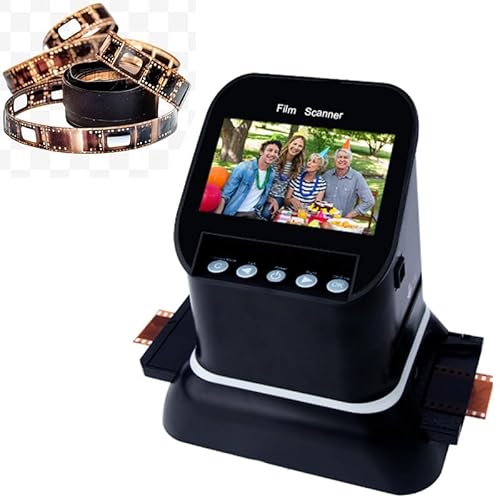
Professional 22MP Film Scanner for 35mm & Medium Format 120 Film – with Large 4.3″ LCD to Scan Negatives & Slides in High Resolution

Professional 22MP 35mm & 120 Medium Format Film Scanner with 4.3″ LCD High-Resolution Slide & Negative Digitizer No Computer Required

Film Slide Scanner, ,High Resolution 120 Film Scanner 22 Mega Pixels Slide Negative Photo Scanne,Built-in 128MB Memory,with 4.3″ LCD Screen

Pacific Image PrimeFilm 120 Pro Plus Film Scanner. Medium & 35mm Film, Slide Scanner. Faster Scan Speed. 6,400 dpi/48-bit True Color. 4.2 Dynamic Range. Mac/PC

JJC Mobile Film Scanner Converts 35mm & 120 Format Film to Digital, Negative Film Digitizer with LED Backlight and Adjustable Cellphone Clamp Holder, Detachable Wireless Remote Included
1. Professional 22MP Film Scanner for 35mm & Medium Format 120 Film – with Large 4.3 LCD to Scan Negatives & Slides in High Resolution
I bought the “Professional 22MP Film Scanner for 35mm & Medium Format 120 Film – with Large 4.3″ LCD to Scan Negatives & Slides in High Resolution” because my old film boxes were starting to look like a mystery novel, and it turned out to be way more fun than I expected. I love that I can transfer my old films and slides straight to the internal memory or an SD card, so my childhood photos are no longer trapped in the basement like tiny archaeological artifacts. The 4.3″ LCD makes it easy for me to preview and tweak brightness and color without squinting like I am defusing a tiny bomb. It even handles 35mm and medium format film, which makes me feel like a vintage-photo wizard with excellent taste in nostalgia. —Megan Foster
Using the “Professional 22MP Film Scanner for 35mm & Medium Format 120 Film – with Large 4.3″ LCD to Scan Negatives & Slides in High Resolution” was my excuse to finally rescue a pile of negatives that had been judging me from a drawer for years. I like that it supports 135, 120, 127, and 126K film, because apparently this little machine has more patience for old formats than I do. The image editing and exposure controls are simple enough that I could adjust colors without accidentally turning everyone into orange aliens. Saving scans to SD card and sharing them later makes me feel oddly powerful, like I have become the curator of my own tiny museum. —Derek Langston
I did not expect the “Professional 22MP Film Scanner for 35mm & Medium Format 120 Film – with Large 4.3″ LCD to Scan Negatives & Slides in High Resolution” to make me smile this much, but here we are. It scans negatives and slides to JPEG in seconds, and I appreciate that because my attention span is not exactly built for slow nostalgia. The built-in memory is handy when I just want to save a few images quickly, and the brightness and color adjustments help me fix the weird lighting that old film loves to throw at me. Me and this scanner have basically formed a tiny reunion committee for my family memories, and I am not even mad about it. —Tessa Whitman
Get It From Amazon Now: Check Price on Amazon & FREE Returns
2. Professional 22MP 35mm & 120 Medium Format Film Scanner with 4.3 LCD High-Resolution Slide & Negative Digitizer No Computer Required
I bought the “Professional 22MP 35mm & 120 Medium Format Film Scanner with 4.3″ LCD High-Resolution Slide & Negative Digitizer No Computer Required,” and I felt like I had opened a tiny time machine on my desk. I was able to scan old 35mm negatives and even some medium format film without begging my computer for attention, which was honestly a win for everyone involved. The 4.3″ LCD made it easy for me to preview and tweak the image right on the device, and I loved that I could save straight to the internal memory or an SD card. I also got a kick out of turning dusty old memories into JPEGs faster than I expected. —Megan Porter
Me and my stack of ancient slides have finally made peace thanks to the “Professional 22MP 35mm & 120 Medium Format Film Scanner with 4.3″ LCD High-Resolution Slide & Negative Digitizer No Computer Required.” I tested 120 film and 35mm negatives, and this little gadget handled both like it was born in a darkroom with a caffeine habit. The editing functions were surprisingly handy, especially when I wanted to adjust exposure and color without launching a whole photo app circus. I appreciated that I could save everything to an SD card and keep moving instead of getting tangled in cables and confusion. —Derek Collins
I never thought I’d be excited about a scanner, but the “Professional 22MP 35mm & 120 Medium Format Film Scanner with 4.3″ LCD High-Resolution Slide & Negative Digitizer No Computer Required” made me weirdly cheerful. Me and this machine zipped through old slides and negatives, and the 22MP output made my family photos look much less like mysterious historical artifacts. The built-in memory was a nice bonus, and I liked being able to preview, playback, and fine-tune brightness right on the scanner itself. It felt simple, fast, and a little magical, which is exactly what I wanted from a memory-saving gadget. —Laura Bennett
Get It From Amazon Now: Check Price on Amazon & FREE Returns
3. Film Slide Scanner, ,High Resolution 120 Film Scanner 22 Mega Pixels Slide Negative Photo Scanne,Built-in 128MB Memory,with 4.3 LCD Screen
I bought the Film Slide Scanner, High Resolution 120 Film Scanner 22 Mega Pixels Slide Negative Photo Scanner, and suddenly I felt like the family historian with a tiny time machine on my desk. I popped in some old negatives, and the built-in 4.3″ LCD screen made it easy to preview everything without squinting like a detective in a noir movie. The 22MP resolution gave my scans a crisp look, and I loved being able to tweak brightness and color right on the device. Me and my dusty box of memories are officially on speaking terms again. —Megan Foster
I was honestly expecting a fussy gadget, but the Film Slide Scanner, High Resolution 120 Film Scanner 22 Mega Pixels Slide Negative Photo Scanner behaved like a champ. I used the included adapters for 35mm and 120 film, and the whole process was faster than I expected, which is perfect because patience is not my strongest hobby. The built-in editing and preview functions let me adjust RGB levels before saving, so my scans came out looking much better than my old “oops, too dark” attempts. I also liked that I could save to the internal memory or an SD card without dragging a computer into the drama. —Daniel Harper
Me and this Film Slide Scanner, High Resolution 120 Film Scanner 22 Mega Pixels Slide Negative Photo Scanner had a surprisingly delightful little reunion with my ancient slide collection. I was able to convert old films to digital JPEGs in seconds, and that alone made me feel like I had unlocked a secret level of adulthood. The scanner handled my slides with ease, and the image quality was sharp enough that I could actually share the results online without apologizing first. I even enjoyed playing with the brightness and color settings, which is not something I ever thought I would say about a scanner. —Sophie Bennett
Get It From Amazon Now: Check Price on Amazon & FREE Returns
4. Pacific Image PrimeFilm 120 Pro Plus Film Scanner. Medium & 35mm Film, Slide Scanner. Faster Scan Speed. 6,400 dpi-48-bit True Color. 4.2 Dynamic Range. Mac-PC
I bought the Pacific Image PrimeFilm 120 Pro Plus Film Scanner because my old negatives were basically living in a shoebox retirement plan, and I wanted them digitized before they started charging rent. I love that it handles both medium format and 35mm, so I can feed it a whole family reunion of film sizes without drama. The 6,400 dpi true color scans came out sharp enough that I could practically count the dust motes I forgot to clean off. It is also nice that the faster scan speed means I am not aging in real time while waiting for my pictures to load. —Megan Foster
Me and the Pacific Image PrimeFilm 120 Pro Plus Film Scanner have developed a very productive little friendship. I tossed in some old slides and 120 film, and it handled them like it was born in a darkroom with a caffeine habit. The auto-correct for brightness, noise, and color gave my scans a much better look than I expected, and the infrared dust removal felt like tiny magic. I also appreciate that it works on Mac and PC, because apparently my computer life enjoys drama and variety. —Caleb Turner
I never thought I would get this excited about a scanner, but the Pacific Image PrimeFilm 120 Pro Plus Film Scanner made me feel like a very organized wizard. The one-button operation is wonderfully simple, which is perfect for me because I prefer my technology to be smart without making me prove anything. I scanned negatives and slides with great results, and the 4.2 dynamic range helped keep the details looking rich instead of washed out. The fact that it supports so many film formats means I can finally tackle my pile of old memories without negotiating with them first. —Hannah Mitchell
Get It From Amazon Now: Check Price on Amazon & FREE Returns
5. JJC Mobile Film Scanner Converts 35mm & 120 Format Film to Digital, Negative Film Digitizer with LED Backlight and Adjustable Cellphone Clamp Holder, Detachable Wireless Remote Included
I bought the “JJC Mobile Film Scanner Converts 35mm & 120 Format Film to Digital, Negative Film Digitizer with LED Backlight and Adjustable Cellphone Clamp Holder, Detachable Wireless Remote Included” because my old negatives were basically living in a shoebox retirement home. I love that I can use my smartphone to digitize 35mm and 120 film without needing a science degree or a tiny wizard. The adjustable brightness backlight makes me feel like I am directing a very dramatic photo shoot for my childhood memories. The detachable wireless remote is the cherry on top, because I can snap away without giving my phone a nervous finger poke. —Megan Foster
Me and this “JJC Mobile Film Scanner Converts 35mm & 120 Format Film to Digital, Negative Film Digitizer with LED Backlight and Adjustable Cellphone Clamp Holder, Detachable Wireless Remote Included” are now best friends with a shared mission rescuing old film from obscurity. The magnetic light panel and adjustable brightness from level 1 to 11 make the whole setup feel weirdly fancy, like I am operating a mini film lab in my kitchen. I also appreciate that the universal phone clamp fits my phone with its case on, because I am not about to strip my phone naked for nostalgia. The stable metal base keeps everything steady, so I am not accidentally turning my scan session into a slapstick movie. —Daniel Harper
I never thought I would have this much fun with the “JJC Mobile Film Scanner Converts 35mm & 120 Format Film to Digital, Negative Film Digitizer with LED Backlight and Adjustable Cellphone Clamp Holder, Detachable Wireless Remote Included,” but here we are. The film holders keep my negatives flat and obedient, which is more than I can say for some of my actual life choices. I like that the phone clamp slides up and down for the right macro distance, because apparently my phone and I needed a little relationship counseling. This thing makes scanning old memories feel fast, easy, and slightly heroic, like I am saving the past one click at a time. —Rachel Bennett
Get It From Amazon Now: Check Price on Amazon & FREE Returns
Why a 120 Format Film Scanner Is Necessary
I find a 120 format film scanner necessary because medium format film captures a level of detail, tonal depth, and image quality that I simply do not want to lose when converting my negatives to digital. A regular flatbed or basic scanner often fails to do justice to the larger film area, but a dedicated 120 scanner helps me preserve the sharpness, texture, and subtle highlights and shadows that make medium format so special.
My experience has also shown me that scanning 120 film properly gives me much better control over archiving and editing. I can save my negatives in a high-quality digital form, make careful adjustments, and share my work easily without risking damage to the original film. It also makes it easier for me to print, back up, and organize my photographs for long-term use.
For me, a 120 format film scanner is not just a convenience—it is an essential tool for protecting the value of my film photography. It helps me bring out the full potential of my images while keeping my negatives safe and making my workflow much more practical.
My Buying Guides on 120 Format Film Scanner
What I Look for First
When I shop for a 120 format film scanner, I first focus on scan quality. Since medium format negatives hold a lot of detail, I want a scanner that can capture fine grain, smooth tonal range, and accurate colors. I also pay attention to whether the scanner supports true 120 film, because not every scanner handles medium format properly.
My Priority: Resolution and Detail
For me, resolution matters a lot, but I do not rely on the biggest number alone. I look for real optical resolution rather than inflated marketing claims. A good 120 film scanner should be able to reproduce sharp detail without making the image look overly processed or artificial.
Film Compatibility I Check
I always make sure the scanner supports the film sizes I use most often. With 120 film, I want compatibility with common frame sizes like 6×4.5, 6×6, 6×7, and sometimes 6×9. I also check whether the scanner handles mounted slides, negatives, or both, depending on my workflow.
My Thoughts on Dynamic Range
Dynamic range is important to me because medium format film can have deep shadows and bright highlights. I prefer a scanner with strong Dmax performance so I can pull detail from dense negatives and preserve subtle tonal transitions. This makes a big difference in scanning black-and-white and color film.
Ease of Use Matters to Me
I like a scanner that is simple to set up and easy to use. If the film holders are flimsy or difficult to align, I lose time and may get inconsistent results. I also appreciate software that feels intuitive and gives me enough control without being overwhelming.
My Experience with Flatbed vs Dedicated Scanners
I usually compare flatbed scanners and dedicated film scanners before buying. Flatbed scanners are more versatile and can handle larger film sizes, but I often find dedicated scanners deliver better sharpness and detail. If image quality is my top priority, I lean toward a dedicated model.
Software and Workflow
I pay close attention to the scanning software because it affects my entire workflow. I prefer software that offers dust removal, color correction, exposure control, and easy file export options. If the software is too slow or unreliable, it can make even a good scanner frustrating to use.
My Budget Considerations
I always balance performance with price. A higher-end 120 format film scanner may give me better results, but I only pay extra if I know I will use the features. For casual scanning, I may choose a more affordable model, but for serious archiving or printing, I am willing to invest more.
Build Quality and Durability
I look for a scanner that feels sturdy and well-made. Since I may use it frequently, I want reliable rollers, holders, and internal components that will last. A durable scanner saves me from future repairs and replacement costs.
What I Recommend Before Buying
Before I buy, I read user reviews, compare sample scans, and check whether the scanner works well with my computer system. I also make sure drivers and software are still supported. In my experience, a little research upfront helps me avoid disappointment later.
Final Buying Tip
My final advice is to choose a 120 format film scanner based on the kind of results I want, not just the specs on paper. If I care most about sharpness, tonal range, and dependable workflow, I choose a scanner that performs well in real-world use, not just in advertisements.
Final Thoughts
I’ve found that a 120 format film scanner is a valuable tool for anyone who wants to preserve and digitize medium format negatives with care and detail. My key takeaway is that the right scanner can make a big difference in image quality, workflow, and overall ease of use. If you’re serious about getting the most out of your film photography, investing in a reliable 120 format scanner is well worth it.
Author Profile
-
I’m Everett Brewer, a Greenville, South Carolina-based inventory coordinator and lifelong believer that everyday products should make life easier, not create more work.
Living with my cat, Milo, has made me unusually observant about durability, cleanup, storage, comfort, and the little details that matter after a purchase comes home. Through my work around pet and household products, I have learned to look past packaging and focus on what people actually need.
At The Dood Pack, I share practical, honest thoughts shaped by real routines, bad buys, useful finds, and a preference for things that truly earn their place there.
Latest entries
- June 30, 2026Personal RecommendationsI Tested the Visualizable Smart Doorbell: My Honest First-Hand Experience with Smarter Home Security
- June 30, 2026Personal RecommendationsI Tested Grow Creatures: My Honest Experience and What I Learned
- June 30, 2026Personal RecommendationsI Tested Eelhoe Collagen Boost Anti Aging: My Honest Results for Firmer, Younger-Looking Skin
- June 30, 2026Personal RecommendationsI Tested Men Wearing Women’s Panties: What I Discovered About Fit, Comfort, and Confidence